AZPML
  • Projects
    • Use
      • Civic
      • Culture
      • Education
      • Exhibition
      • Infrastructure
      • Landscape
      • Leisure
      • Masterplanning
      • Mixed Use
      • Office
      • Research
      • Residential
      • Retail
      • Sport
      • Transport
    • Size
      • <1.000m2
      • 1.000 – 5.000m2
      • 5.000 – 10.000m2
      • 10.000 – 50.000m2
      • >50.000m2
    • Location
      • Africa
      • Asia
      • Australia
      • Europe
      • North America
      • South America
  • About
    • Profile
    • Principals
    • Awards
    • Publications
  • Contacts

Client: Palma Provincial Council

Location: Palma de Mallorca, Spain

Date: 2025

Type: Culture

Area: 23271m2

Budget: €33 million


AZPML

Alejandro Zaera-Polo, Maider Llaguno-Munitxa, Ivaylo Nachev

ROS+FALGUERA Arquitectura – Pablo Ros

AIGUASOL – Alex Ivanchic, Toni Herena

SOCOTEC – Xavier Aguilo, Inma Fortea, Blanca Boira

J2L Ingenieria – Jose Luis Hernandez Yuste

Cost Estimation – Salvador Segura
Exhibition and Trade Fair Centre in Palma de Mallorca

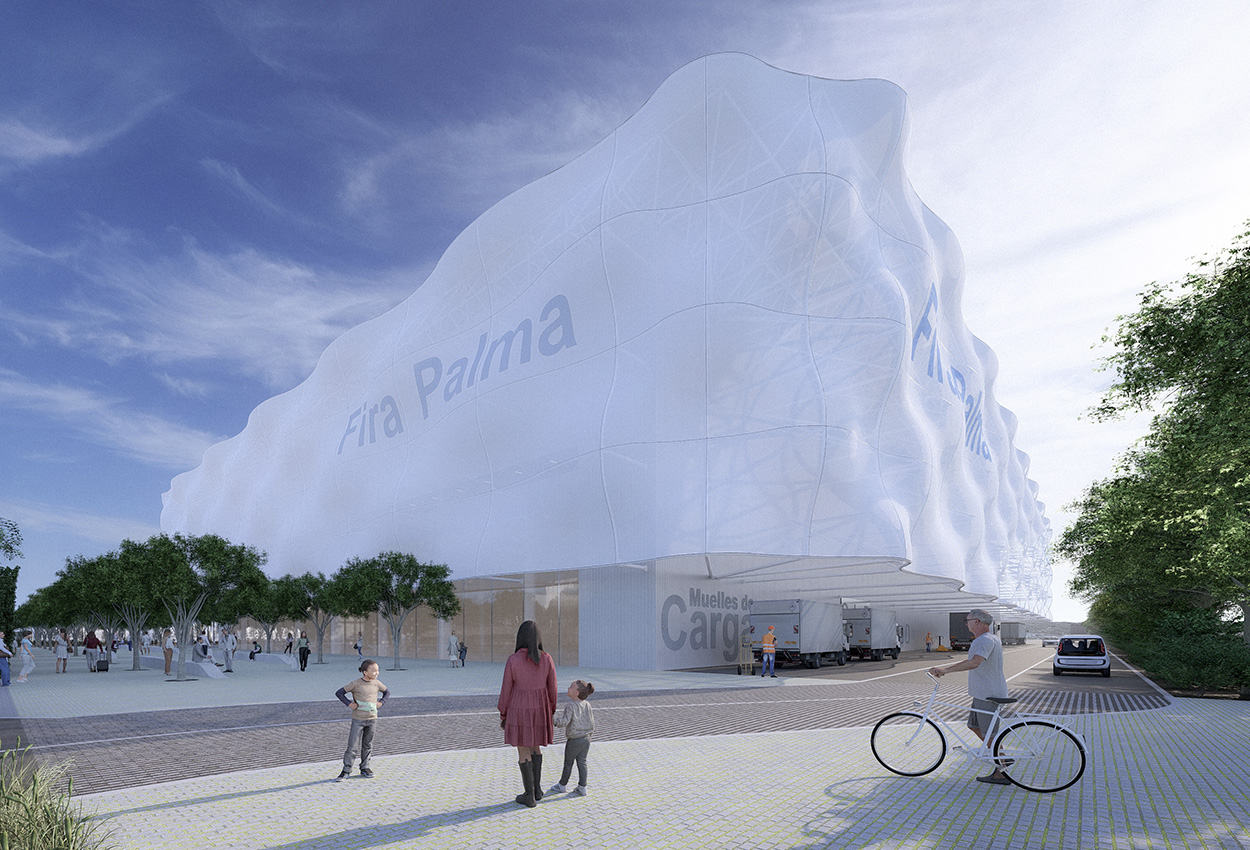
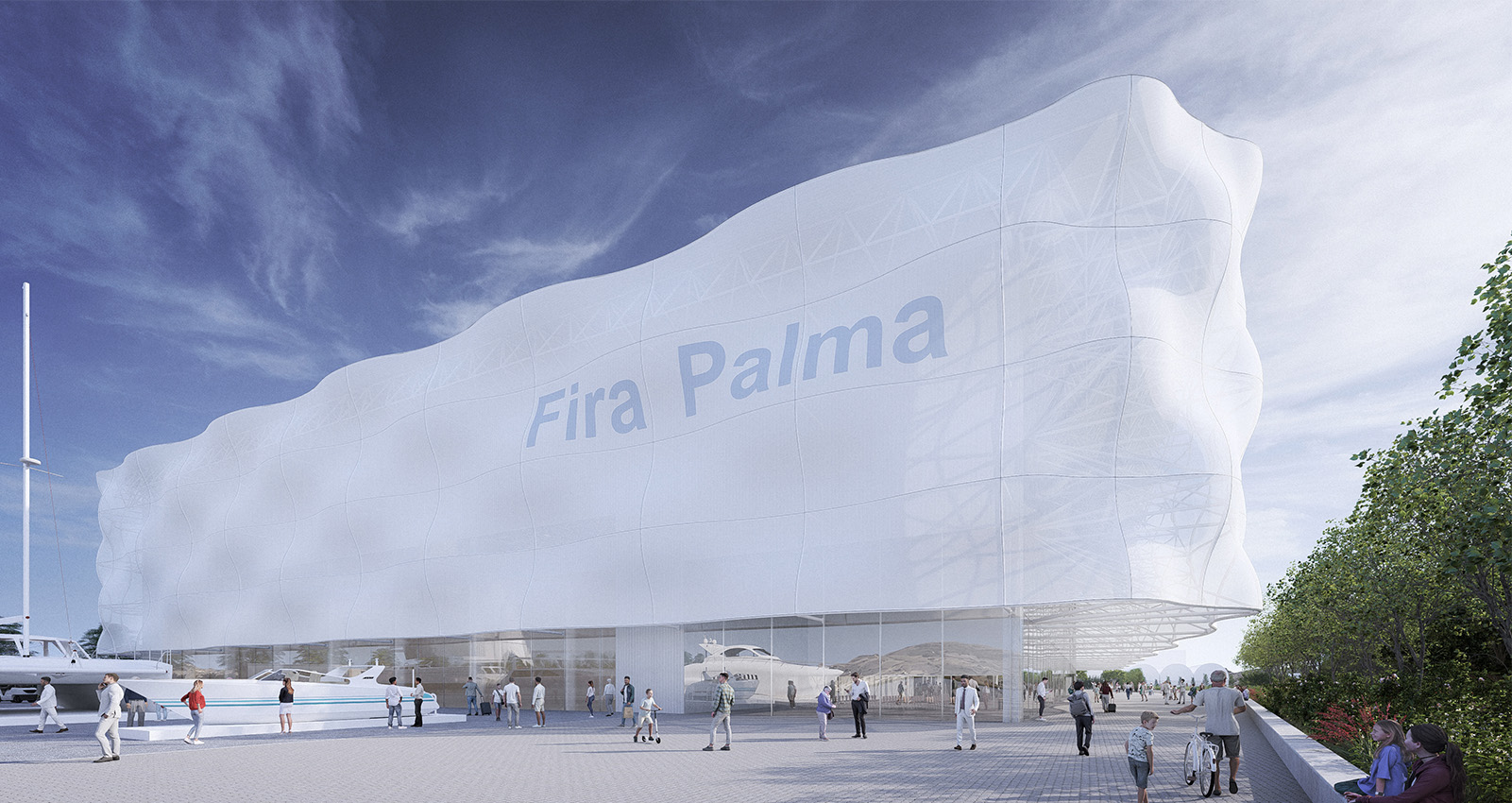
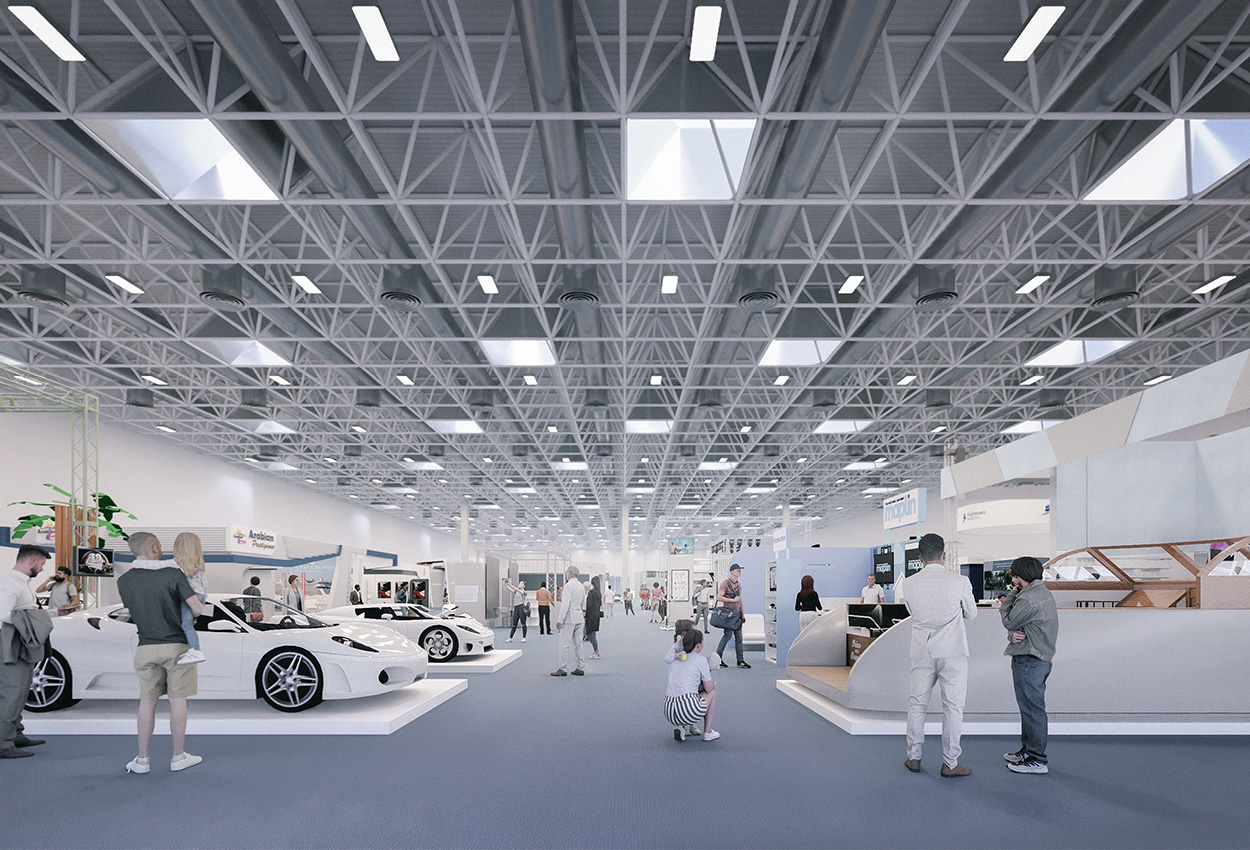
Our proposal, a 23,271 m² exhibition and trade fair centre with 14,720 m² of exhibition space spread over two floors, is designed to maximize flexibility, focusing on low-impact logistical sectors that capitalize on the tourist influx and the capacity of Sant Joan Airport, mitigating the limitations arising from its island status and distinguishing Palma as a MICE destination. Our proposal also seeks to create a project capable of utilizing the maximum building area on the site in a second phase that would accumulate 47,140 m² of exhibition and conference spaces, providing maximum flexibility, maximizing efficiency, and minimizing costs. Finally, our proposal captures the iconographies associated with Mallorca in the complex’s architecture: the sails of ships and the undulating surface of the sea, creating an architecture that is iconographically specific to Palma.

Spatial Structure of the Project

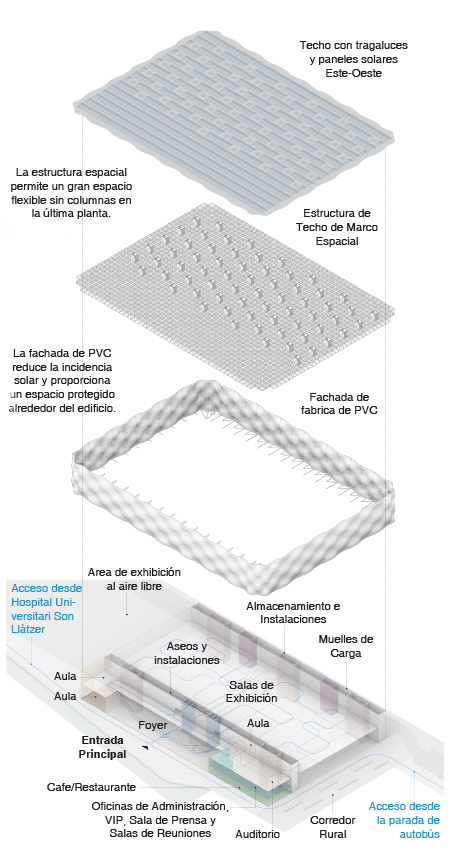
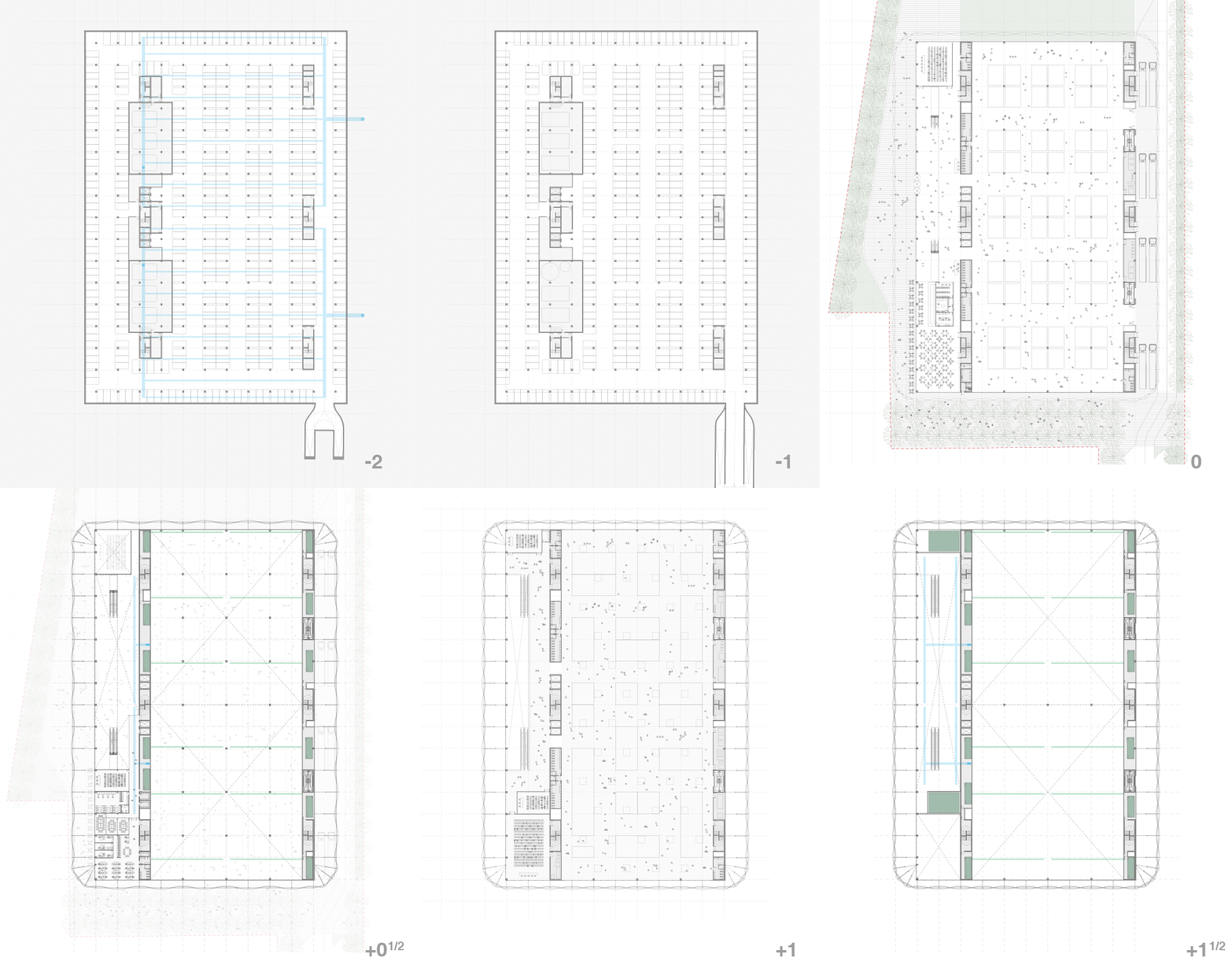
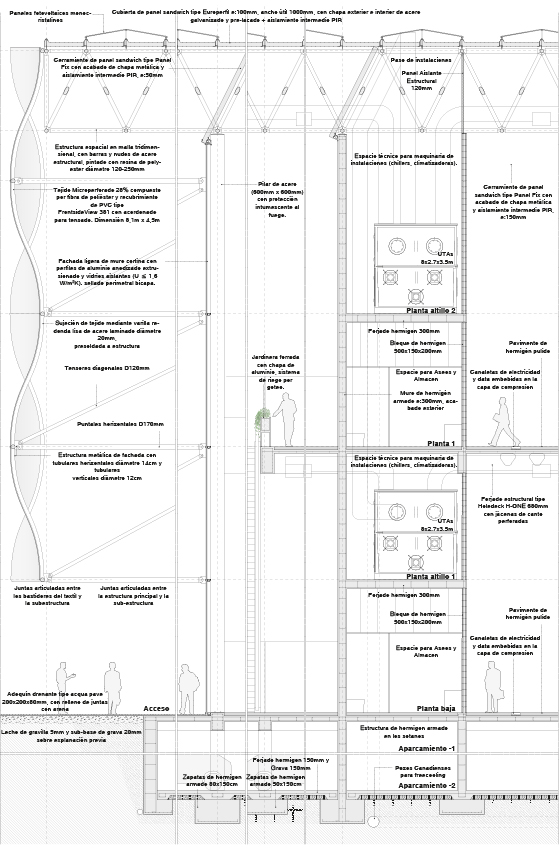
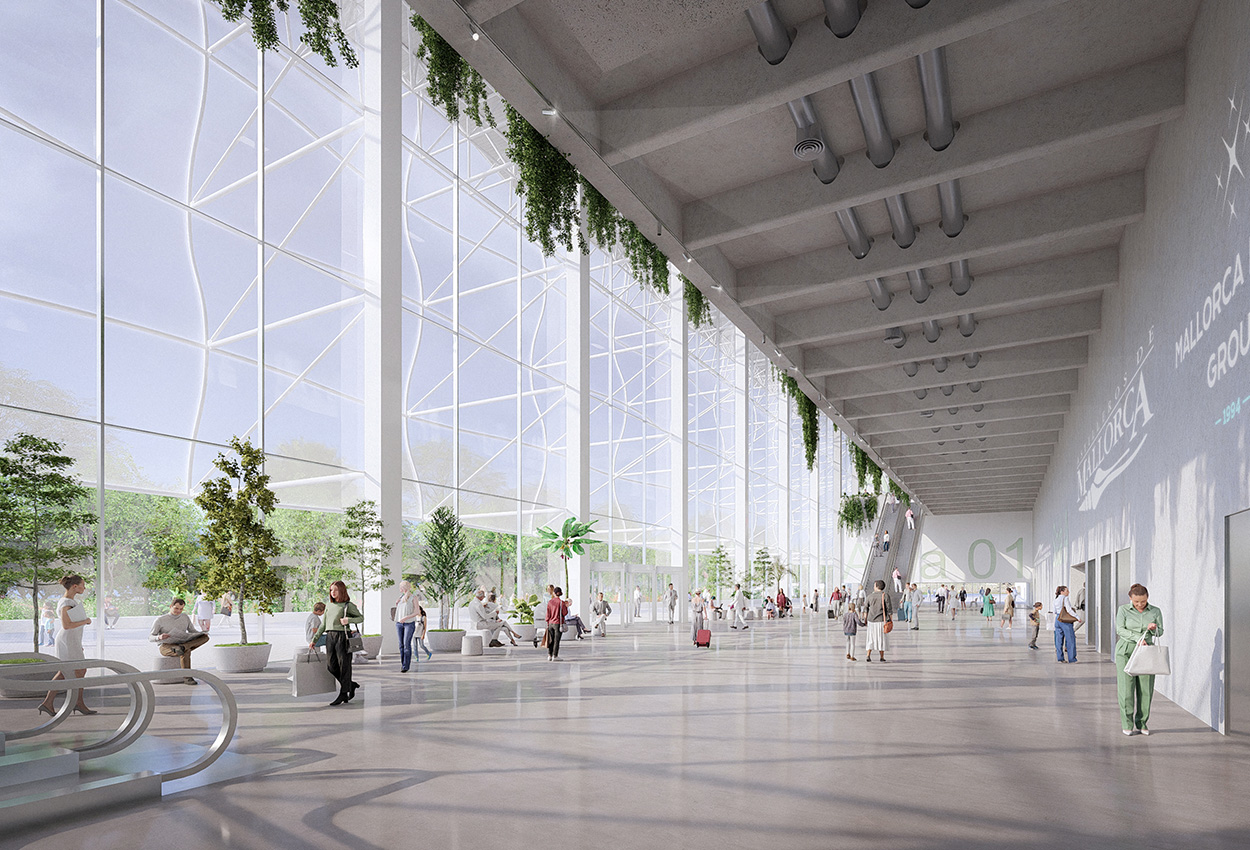
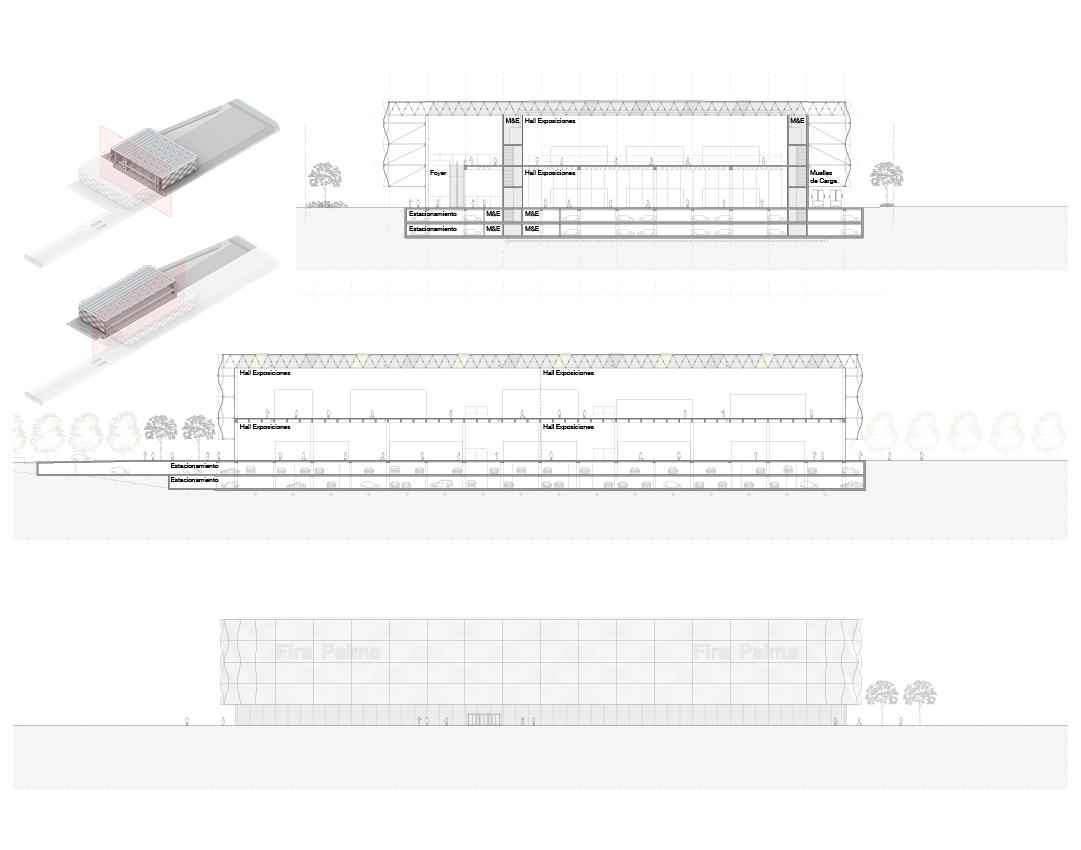
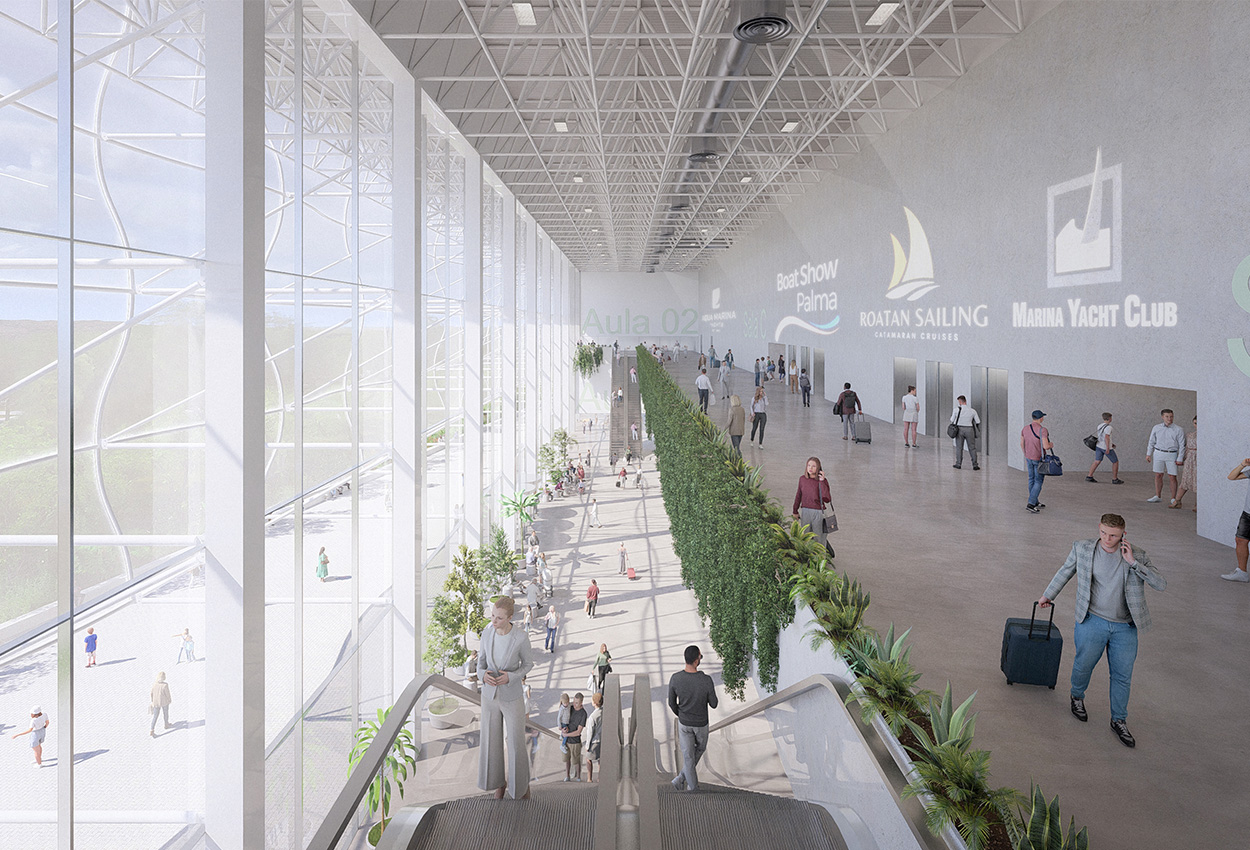
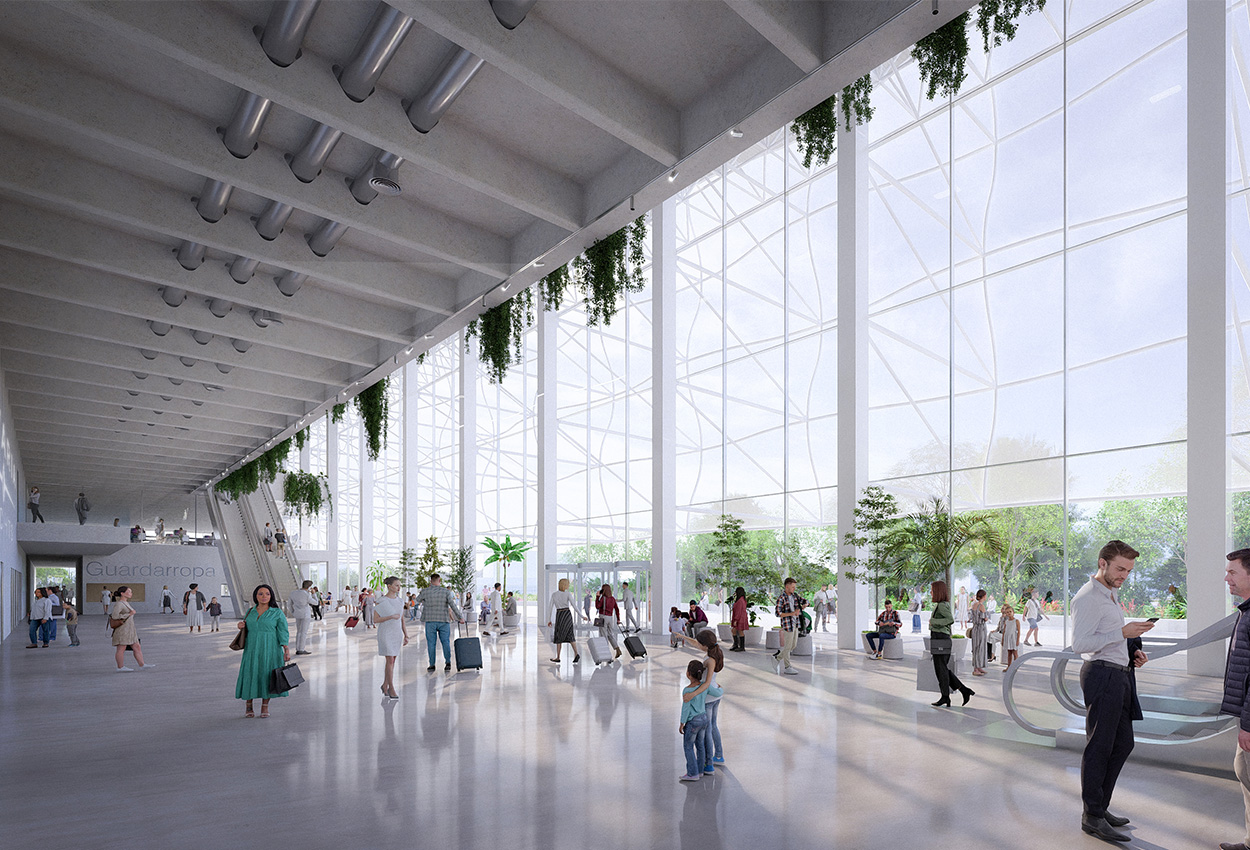
The building is structured on two floors of 7,340 m2 of net exhibition space, plus complementary conference, educational and hospitality services, with all their technical equipment and services. Each floor is divisible into two exhibition areas of 3,670 m2 with independent operating capacity in terms of public access and logistics. The building is basically a parallelepiped measuring 82 m x 130.5 m and with a 20 m clear height from ground level to the roof ceiling, plus two levels of parking with capacity for 920 vehicles. This volume could be expanded in the future to double the capacity by simply replicating the construction system. The main public entrance will be from the east side of the building, through a complete 2,100 m2 band that includes the access foyer, catering, auditoriums, and conference and administration rooms.

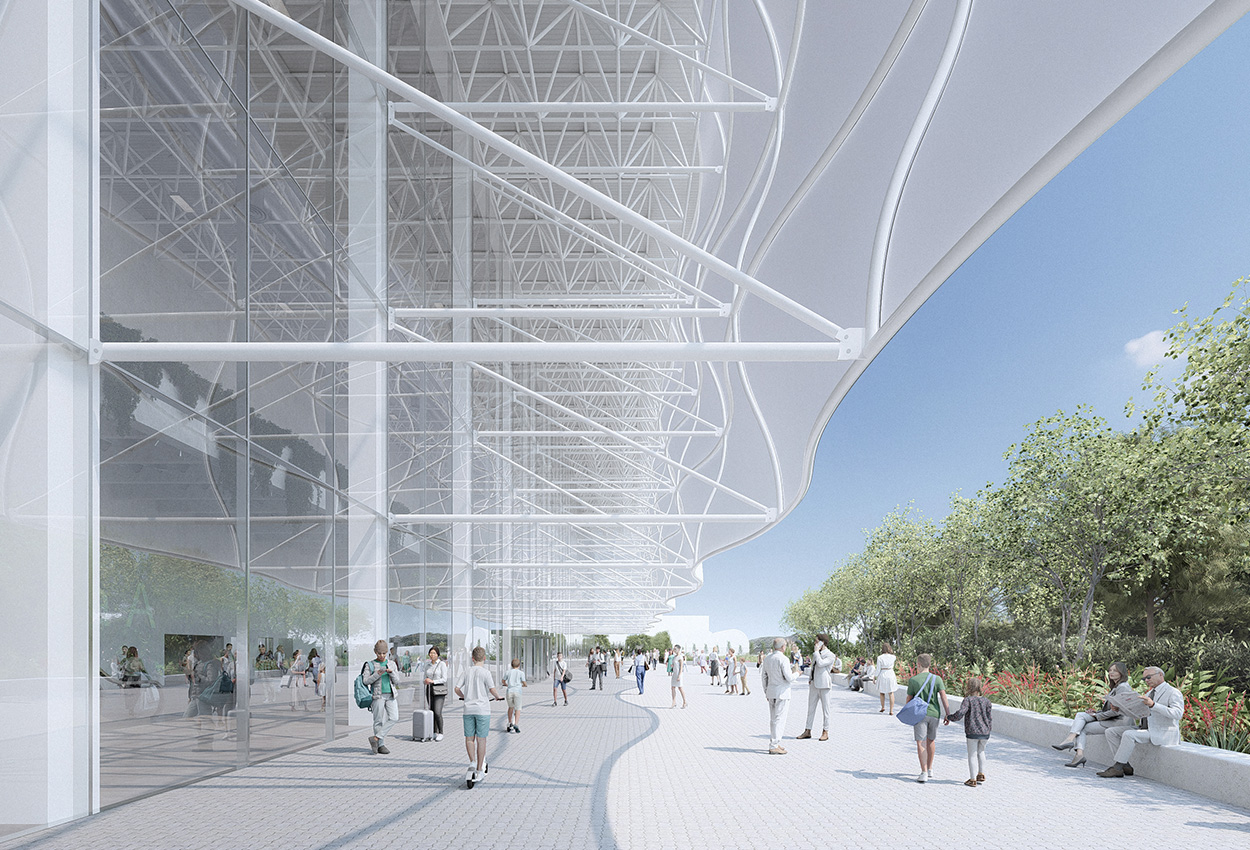
The roof extends to the east, creating a canopy covering an 8.1 m strip of outdoor space that complements the climate-controlled access areas. Logistics access is from the west side, where an 8.1 m canopy will cover logistics activities.

Physical Structure of the Project

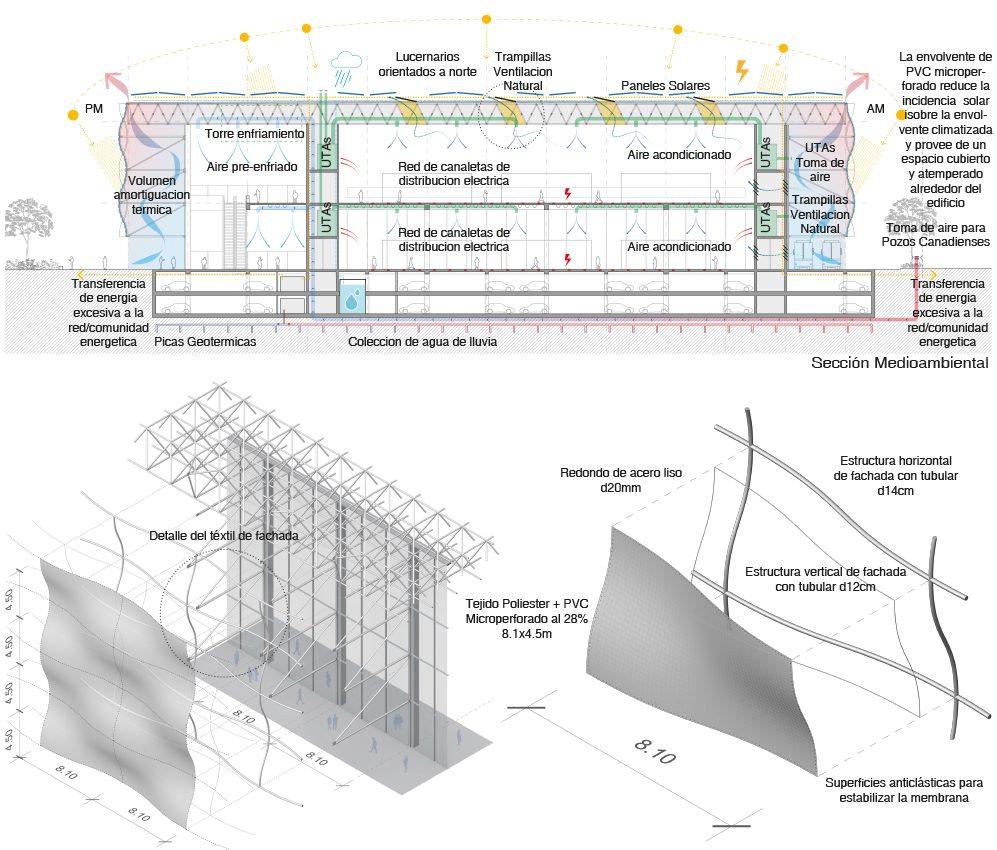
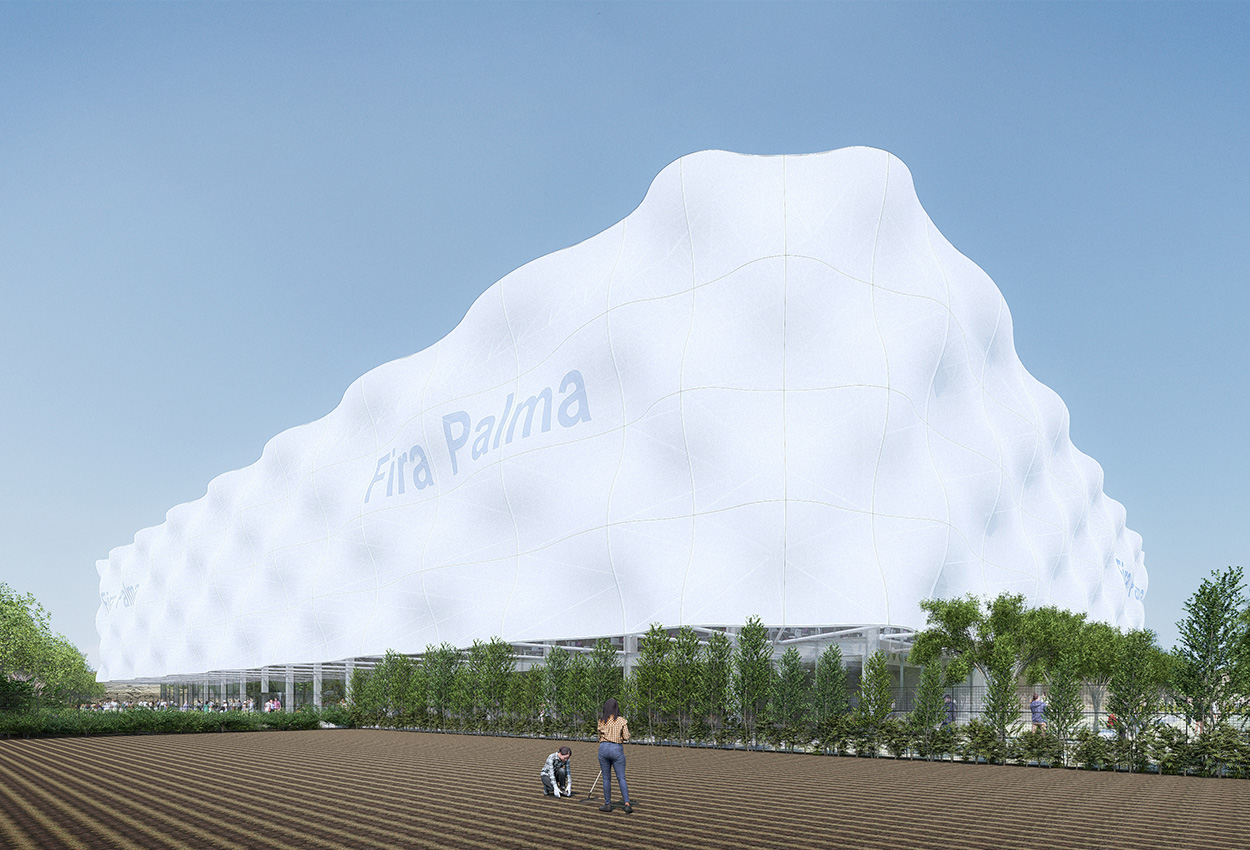
The building is configured as a large container, based on a reinforced concrete structure with spans of 16.2 x 16.2 m at ground level and covered with a large-span spaceframe structure on the second floor, creating a completely open space. A lightweight textile envelope hangs from the edge of the perimeter canopy formed by the cantilevered roof extension to protect the building and its surrounding outdoor space from solar radiation and rain. This envelope facilitates logistical activities on the east side and allows for outdoor events on the public side of the building on the west side. The cantilever on the east and west faces is 8.1 m wide and extends from the cantilevered roof, using a series of cantilevered struts that transfer the loads from the masonry envelope to the structure of the air-conditioned box (the colonnade that forms the west facade and the structure that forms the freight elevator shafts on the east wall).

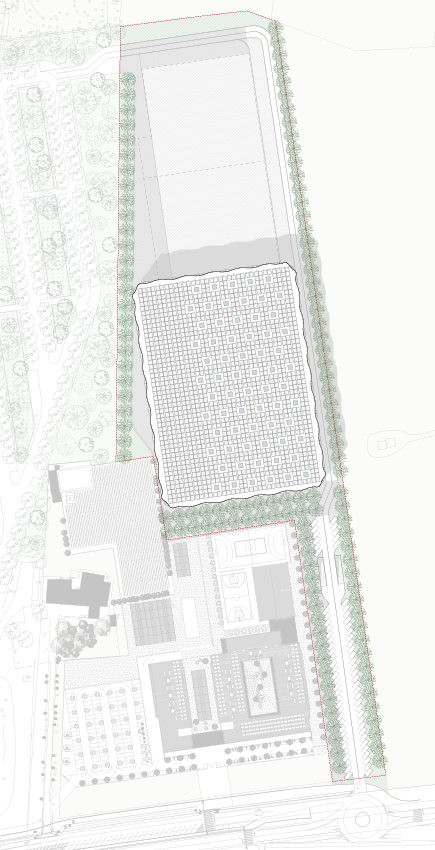
The volume will be located at the southern end of the site, leaving an esplanade paved with permeable precast concrete blocks to the north of the volume for holding fairs or outdoor events. The second phase will be built on the space of this esplanade.

Iconography and Envelope

The building will be covered with a solar roof of approximately 8,800 m2 of photovoltaic-thermal panels that will provide the building with energy self-sufficiency, combined with geothermal energy.


The envelope of the air-conditioned space will be constructed with metal sandwich panels and multi-layer polycarbonate panels on the north and south faces of the ground floor to provide natural lighting to the rooms. The public access gallery on the east side will be enclosed by a conventional double-glazed curtain wall, 20 m high, fixed to a portico of columns spaced every 8.1 m. This white fabric envelope significantly increases the albedo of the building’s structure, while also protecting it from solar radiation. It will be constructed with a micro-perforated PVC envelope, tensioned and secured by cables over a substructure of curved galvanized steel tubes, which produce anticlastic surfaces to stabilize the membrane. The geometry of this white, three-dimensionally undulating membrane is intended to resonate with the iconography of waves and the ripples of the sea’s surface, and with the imagery of nautical sails so closely associated with Palma.

AZPML
LEGAL COPYRIGHT@ AZPML. all copy rights reserved