AZPML
  • Projects
    • Use
      • Civic
      • Culture
      • Education
      • Exhibition
      • Infrastructure
      • Landscape
      • Leisure
      • Masterplanning
      • Mixed Use
      • Office
      • Research
      • Residential
      • Retail
      • Sport
      • Transport
    • Size
      • <1.000m2
      • 1.000 – 5.000m2
      • 5.000 – 10.000m2
      • 10.000 – 50.000m2
      • >50.000m2
    • Location
      • Africa
      • Asia
      • Australia
      • Europe
      • North America
      • South America
  • About
    • Profile
    • Principals
    • Awards
    • Publications
  • Contacts

Client: City of Burgas

Location: Burgas, Bulgaria

Date: 2025

Type: Culture

Area: 8590m2

Budget: €21 million


AZPML

Alejandro Zaera-Polo, Maider Llaguno-Munitxa, Ivaylo Nachev

General Aims

The primary ambitions of our project are:

1.Provide a new thematic public park/garden, open and accessible to all, which can become a new landmark for tourists and residents. The proposed orchard will be the largest rose garden on the black sea, which will be used as a botanical exhibition space, showcasing the rich Bulgarian history of rose cultivation and rose oil production.

2.Fully utilize the existing “hole” and minimize any further excavations.

3.Integrate all the above ground spaces into one compact volume where the various programs can work together or independently.

4.To achieve maximum sustainability through the compactness of the building mass and the adoption of innovative technologies.
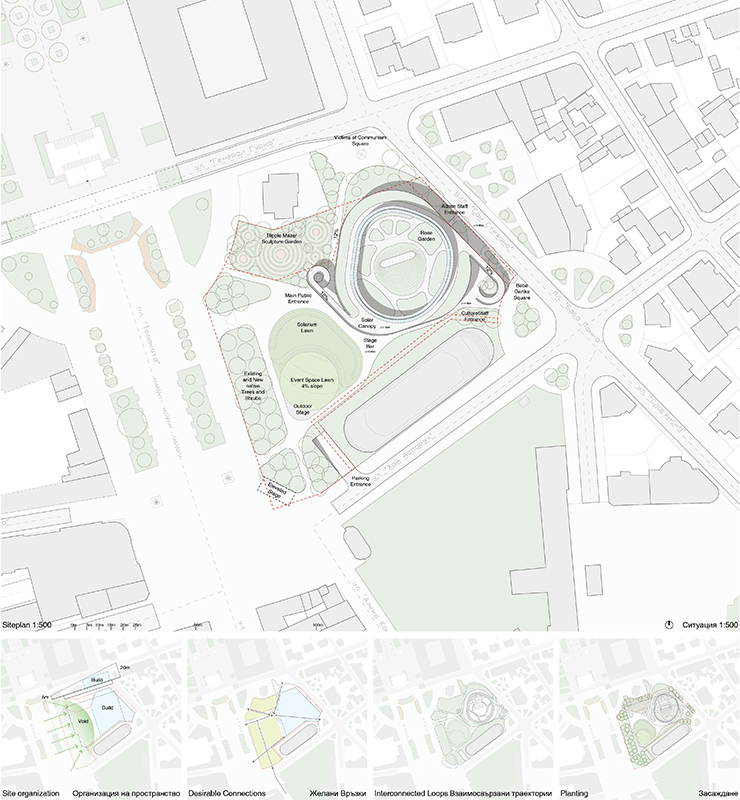
Overall Concept

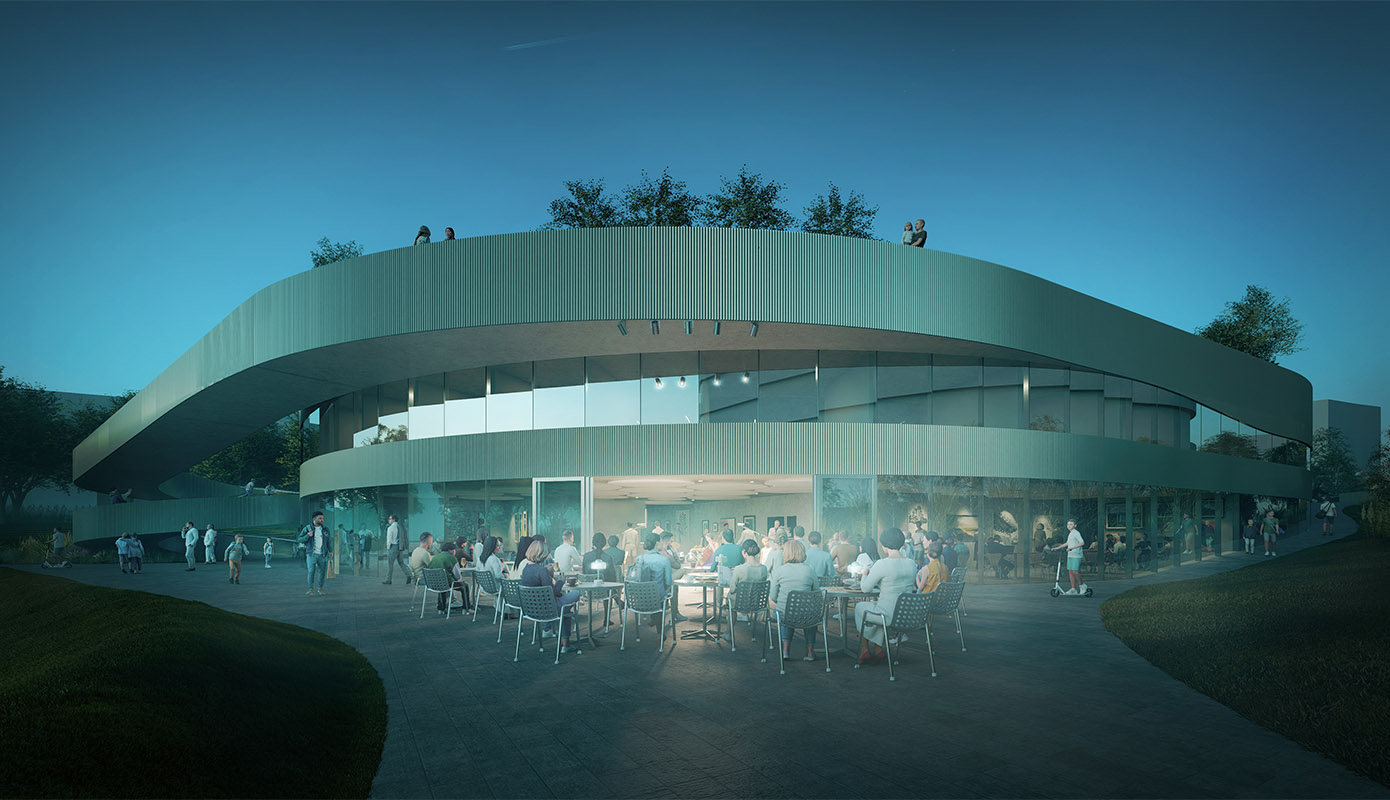
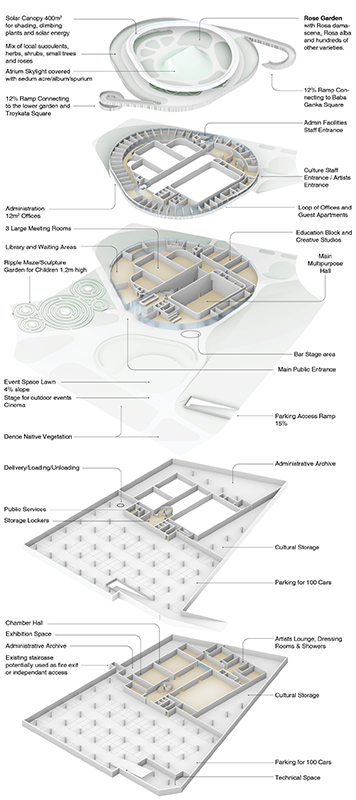
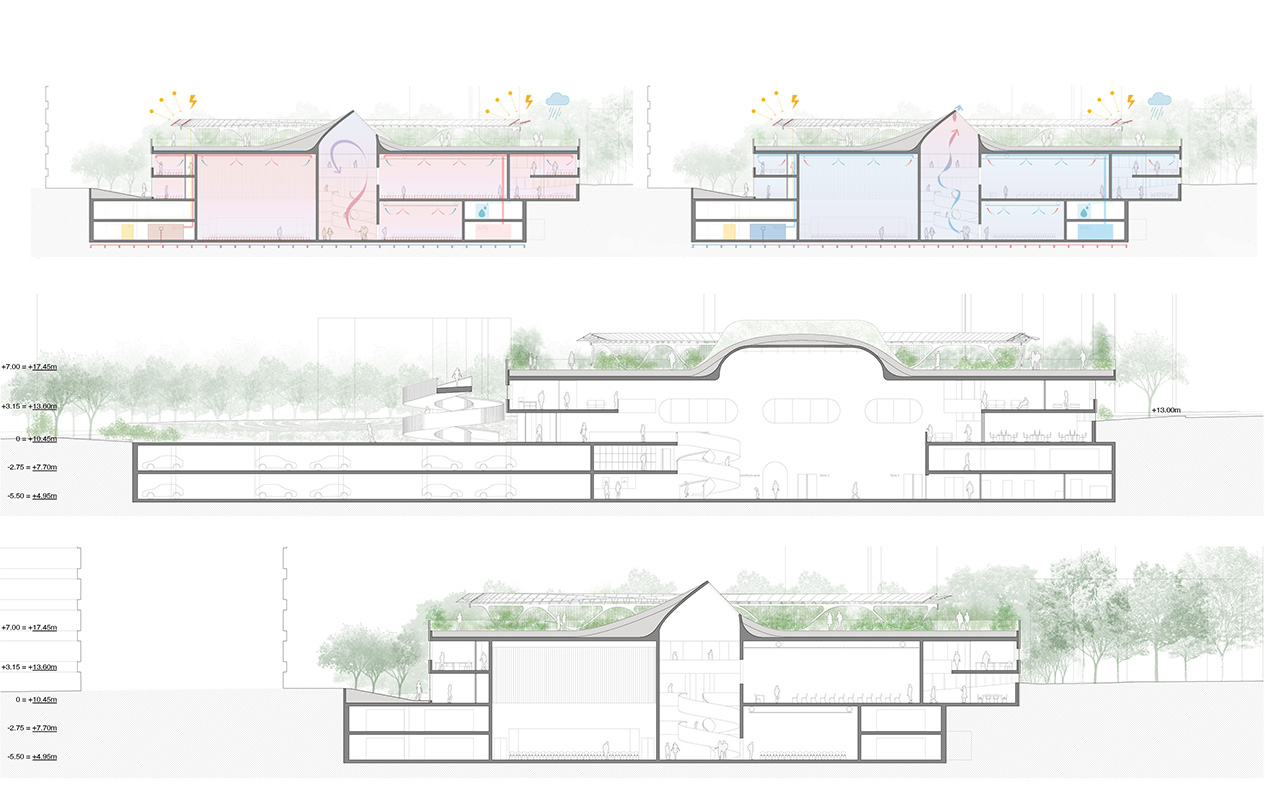
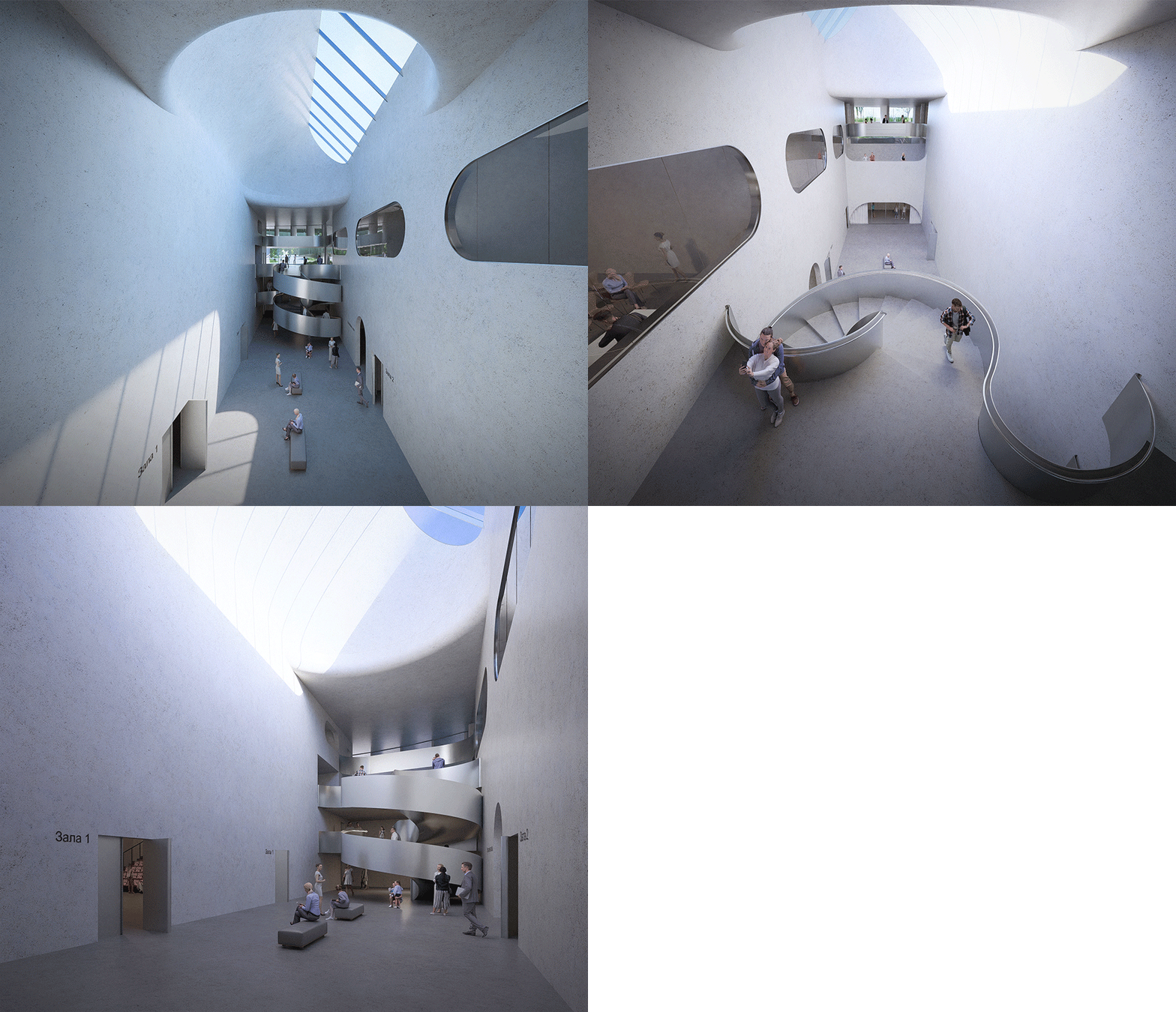
Our proposal for the future Burgas ParkZone3 is aimed to provide a landmark building which will engage with Burgas’s natural heritage, while providing an infrastructure open and capable to engage the larger public. The building has been designed as a very compact, single mass, organized around a central atrium which will provide visual and physical connectivity between the different programs, while acting as a thermal regulator and air-circulation inducer. In the summer, the atrium will act as a natural ventilation engine, making the air move upwards through buoyancy while extracting the air from the rooms naturally. In the winter it will act as a thermal buffer where the air will be naturally heated by the greenhouse effect. The atrium will be crowned with a large skylight with perimetral vents.

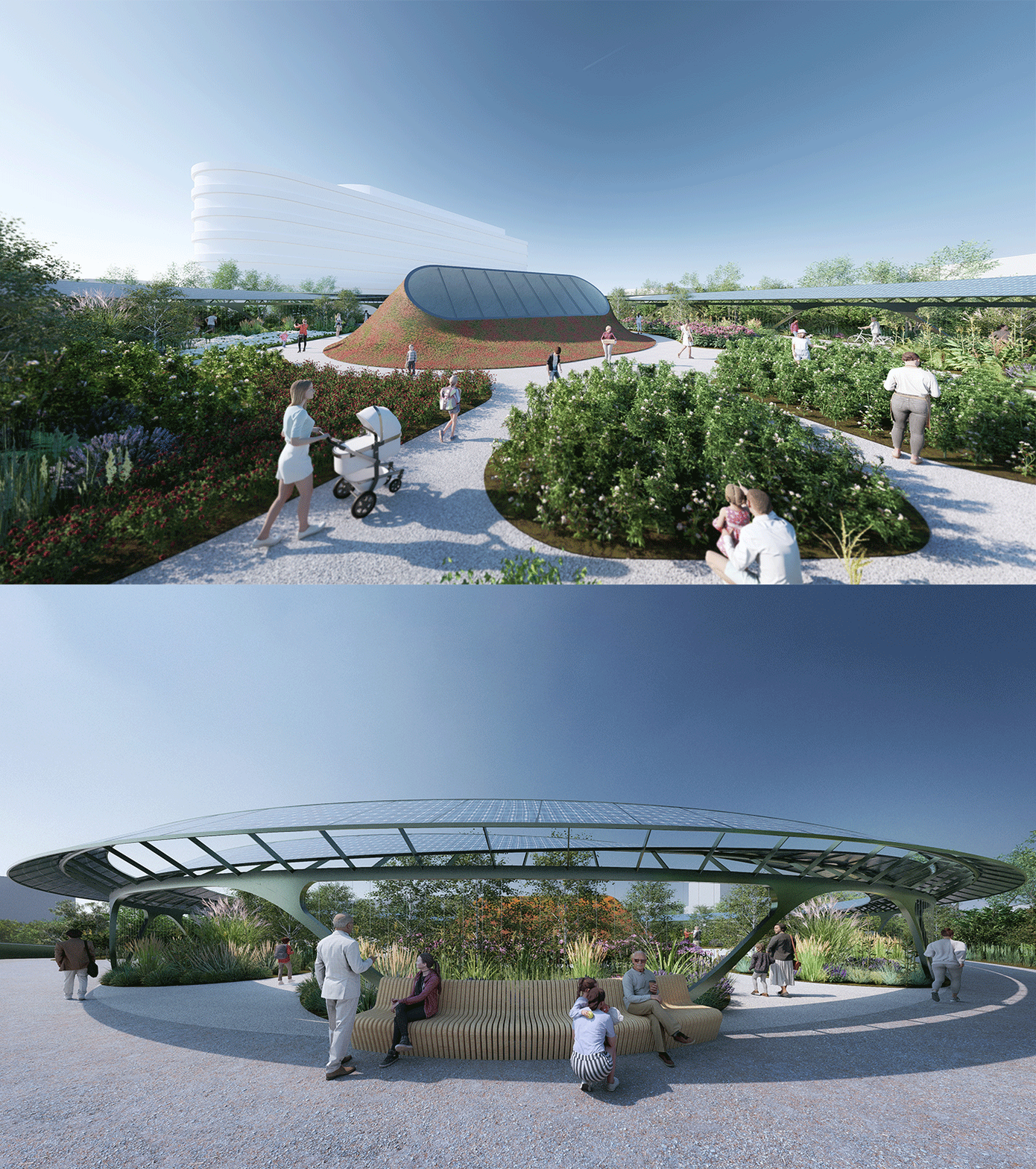
The compact mass of the building will provide the opportunity to use the roof as an accessible roof garden, the largest rose garden on the Black Sea, showcasing the rich Bulgarian heritage of rose culture.

Architectural Solution/Building Character

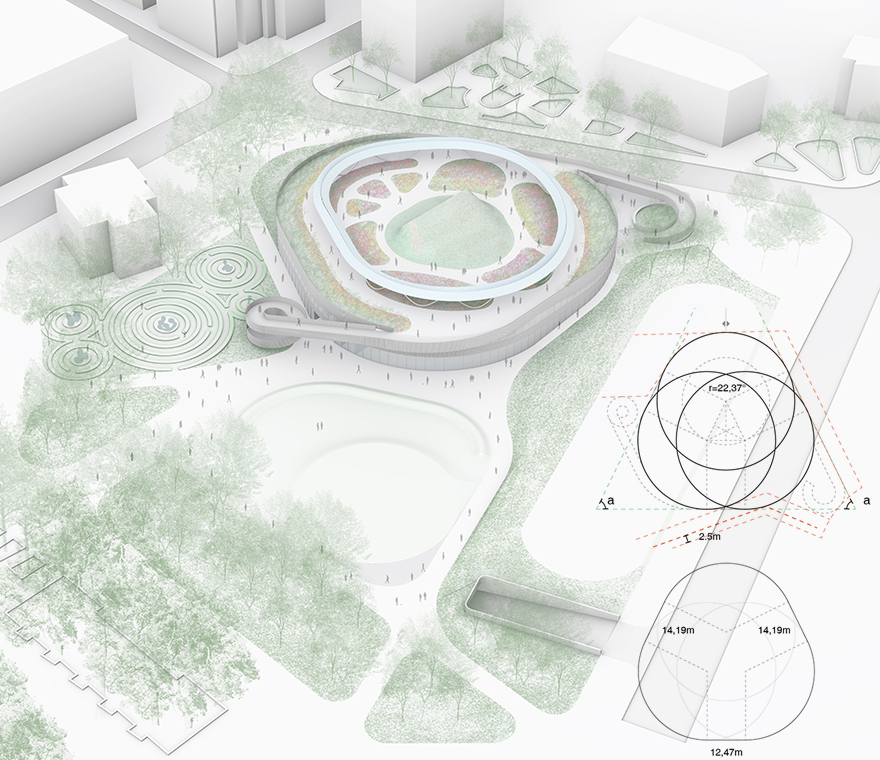
The project envelope is the result of the complicated boundary conditions of the site. The perimeter evolves as a rounded clover shape which aligns with the multiple diagonals and touches with tangencies the orthogonal sides.

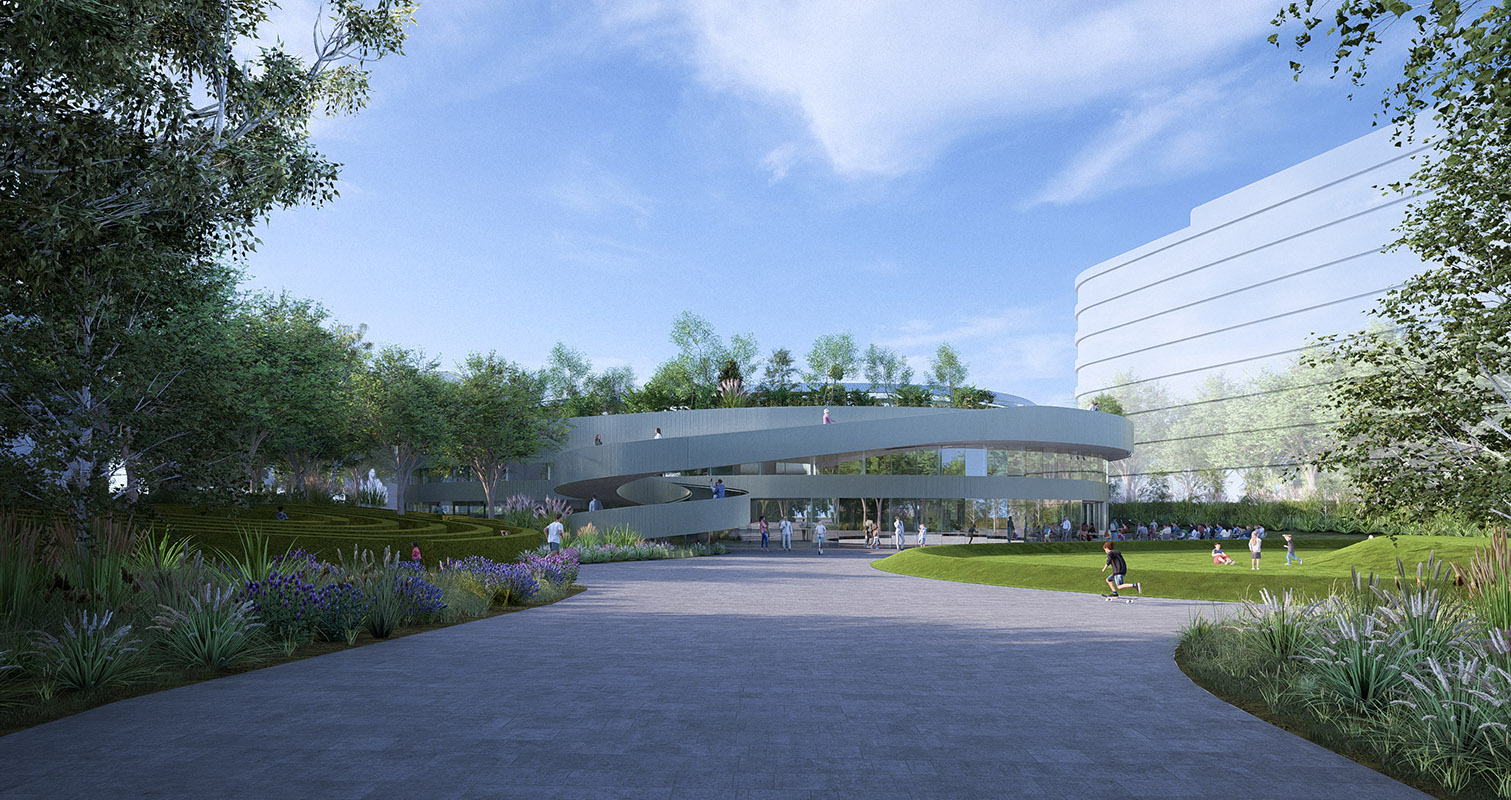
It is a volume with constantly revolving perimeter which doesn’t seem to have a defined alignment, giving the idea of a free-floating building within a green park. The envelope is very open and transparent, establishing a strong connection with the surrounding vegetation. The facades feature two horizontal bands, which revolve around the building and peel-off to become ramps (in the case of the roof). The bands help to reduce the glazed surfaces, optimize energy efficiency and provide privacy for the offices and guest apartments on the mezzanine level. The bands will be clad with corrugated aluminium sheets, allowing for fast and easy bending on site when installed on the curved facades. The unravelling of the envelope into the ramps will serve as a clear signal, highlighting the public nature of the roof and inviting people to explore the rose garden on top.

Program organization and outdoor space functions

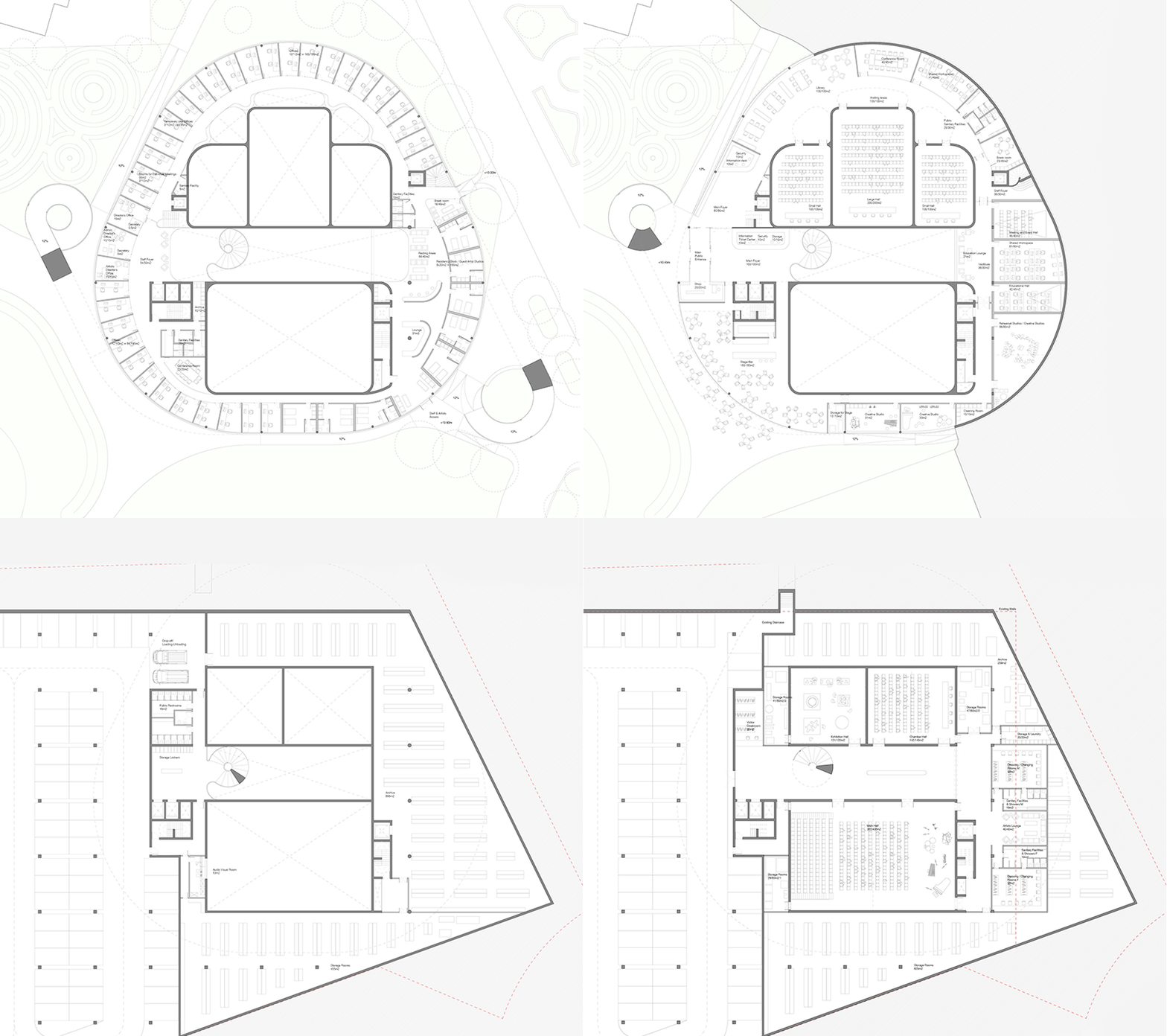
Programmatically, the project takes advantage of the 3m level difference between the eastern and the western sides. The main program is located on the eastern side where both Administrative and Cultural functions will be compacted, sharing a common location for the public access. In case of larger or shared events, a direct link between the two could be achieved on all levels.

The parking is located on the west side instead of underneath the building, allowing for easier natural ventilation and compliance with fire regulations. It also allows for a more flexible use in the future when car reliance is reduced.

The materiality is clean and industrial, considering economic efficiency and durability. The image is that of a building looking towards the smart future Burgas City has been aiming at.

The loadbearing structure will be made in reinforced concrete to minimize costs and comply with seismic and acoustic standards. An 8.1*8.1m structural grid organizes the whole site. The interior is bare and mineral with rounded edges which provide a consistent experience between the interior and exterior.

AZPML
LEGAL COPYRIGHT@ AZPML. all copy rights reserved