AZPML
  • Projects
    • Use
      • Civic
      • Culture
      • Education
      • Exhibition
      • Infrastructure
      • Landscape
      • Leisure
      • Masterplanning
      • Mixed Use
      • Office
      • Research
      • Residential
      • Retail
      • Sport
      • Transport
    • Size
      • <1.000m2
      • 1.000 – 5.000m2
      • 5.000 – 10.000m2
      • 10.000 – 50.000m2
      • >50.000m2
    • Location
      • Africa
      • Asia
      • Australia
      • Europe
      • North America
      • South America
  • About
    • Profile
    • Principals
    • Awards
    • Publications
  • Contacts

Client: Alicante Provincial Council

Location: Elche, Spain

Date: 2025

Type: Culture

Area: 15000m2

Budget: €50 million


AZPML

Alejandro Zaera-Polo, Maider Llaguno-Munitxa, Ivaylo Nachev


SOCOTEC

Xavier Aguilo, Marti Riera


Cost Estimation

Alberto López

Local Monumentality:

LIMESTONE, CREMA MARFIL, PALM AND ESPARTO TREES, ASHWELLS, LOOPS AND TETRASTYLE PORTICO

Our proposal for the Elche Conference Centre aims to produce an institutional architecture intimately connected to the local landscape, its geology, and vegetation. We propose a building that is capable of capturing the qualities of the landscape of Bajo Segura, with its alluvial limestone and sandstone soils, and its semi-arid Mediterranean climate, where scrubland and reeds predominate in the wetland areas. Clearly, the presence of the Elche Palm Grove is crucial in our attempt to capture the local landscape in the project.
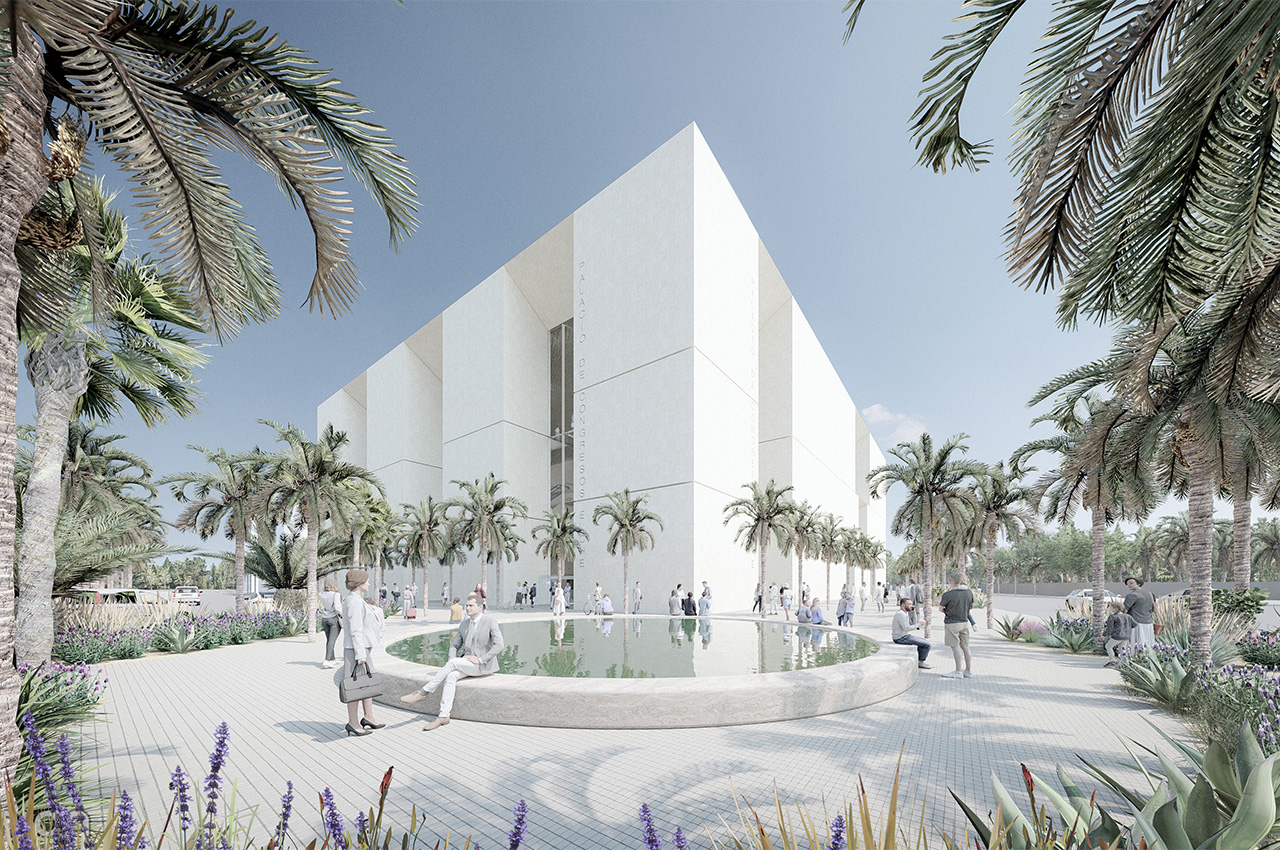
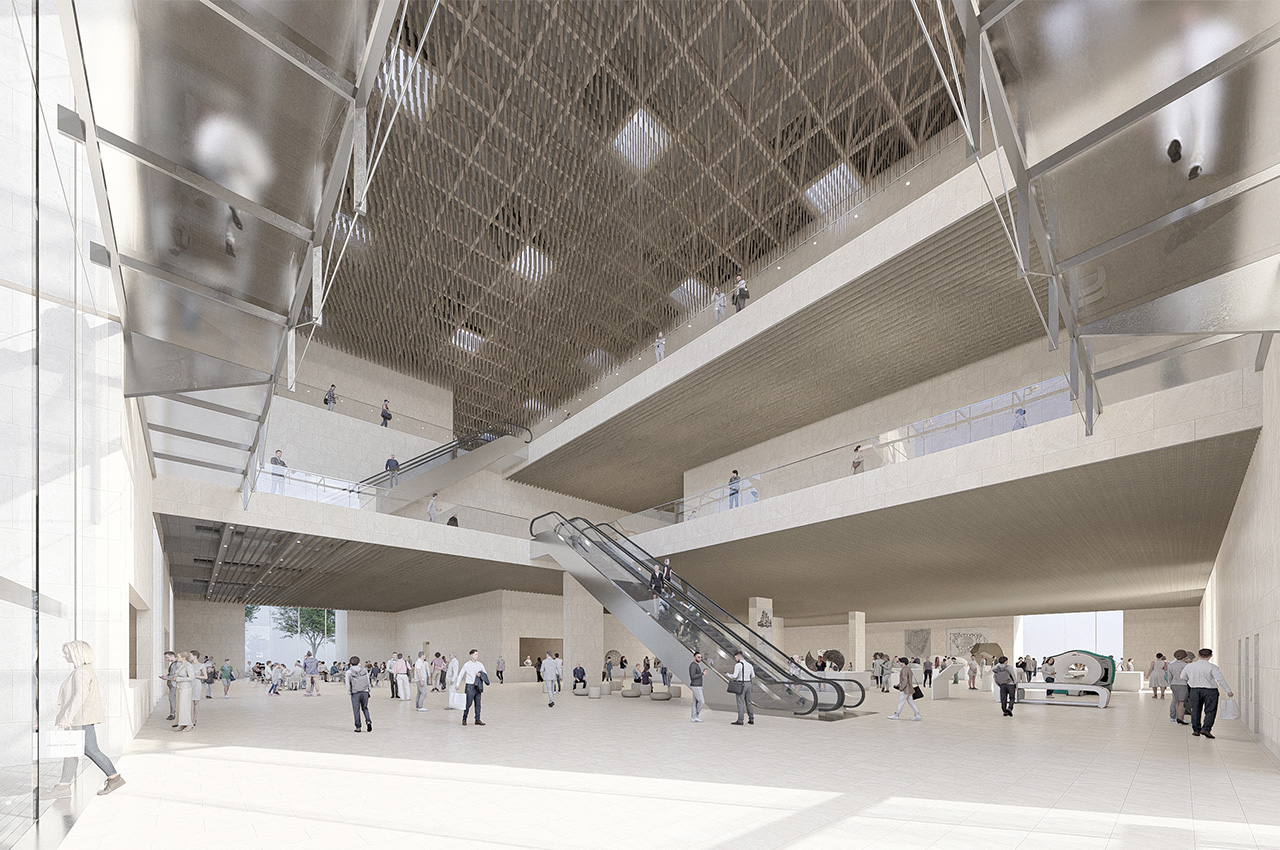
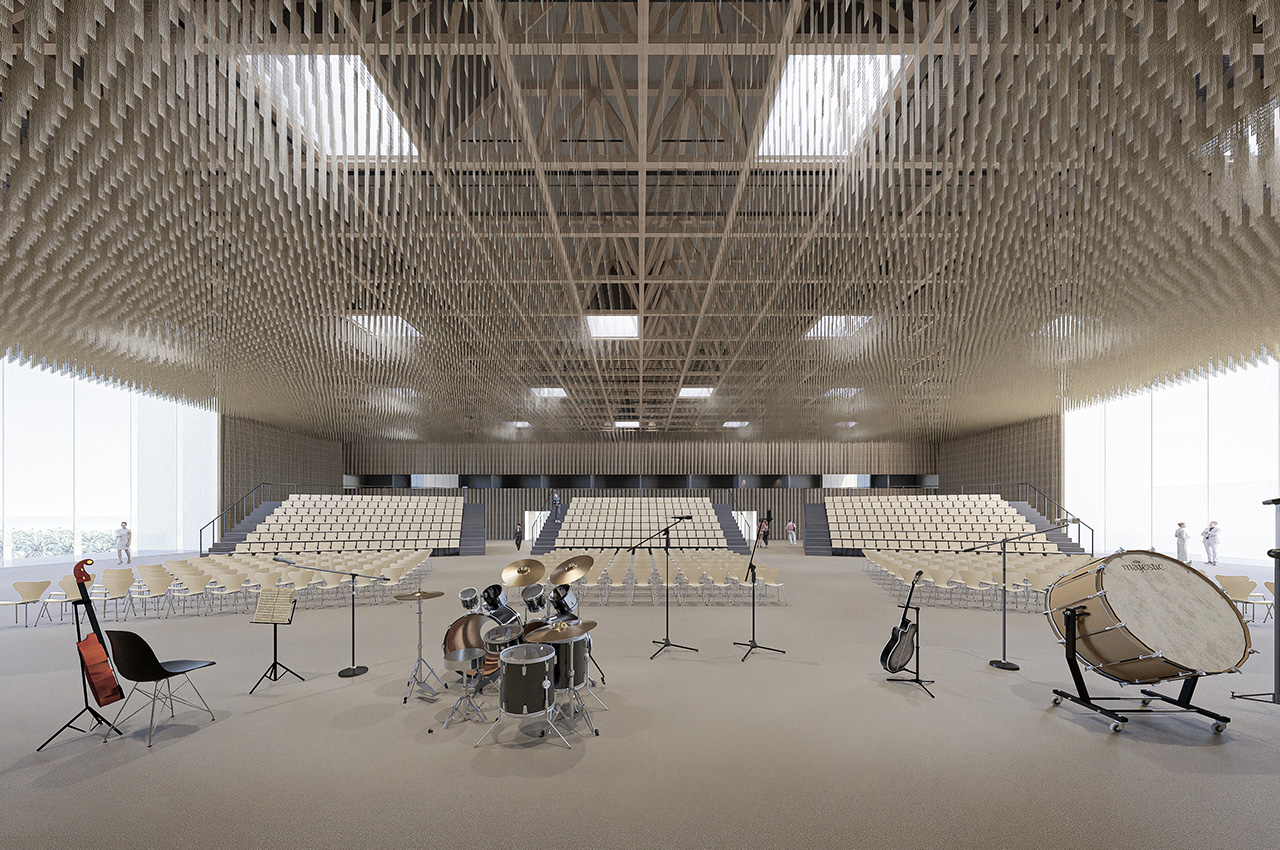
Our project begins with this local materiality, primarily defined by the geology, vegetation, and semi-arid Mediterranean climate, and attempts to develop a sensibility derived from these textures, but also from the local crafts that have historically developed in Elche. The local limestone, with its characteristic beige colour, is the material that characterizes the building’s exterior appearance. In the interior finishes, however, we have attempted to utilize the textures of wicker, which characterize traditional industries in the area, and which utilize palm trees and esparto grass to produce various fabrics and braids.

ASHLES, LOOPS, AND TETRASTYLE PORTICO

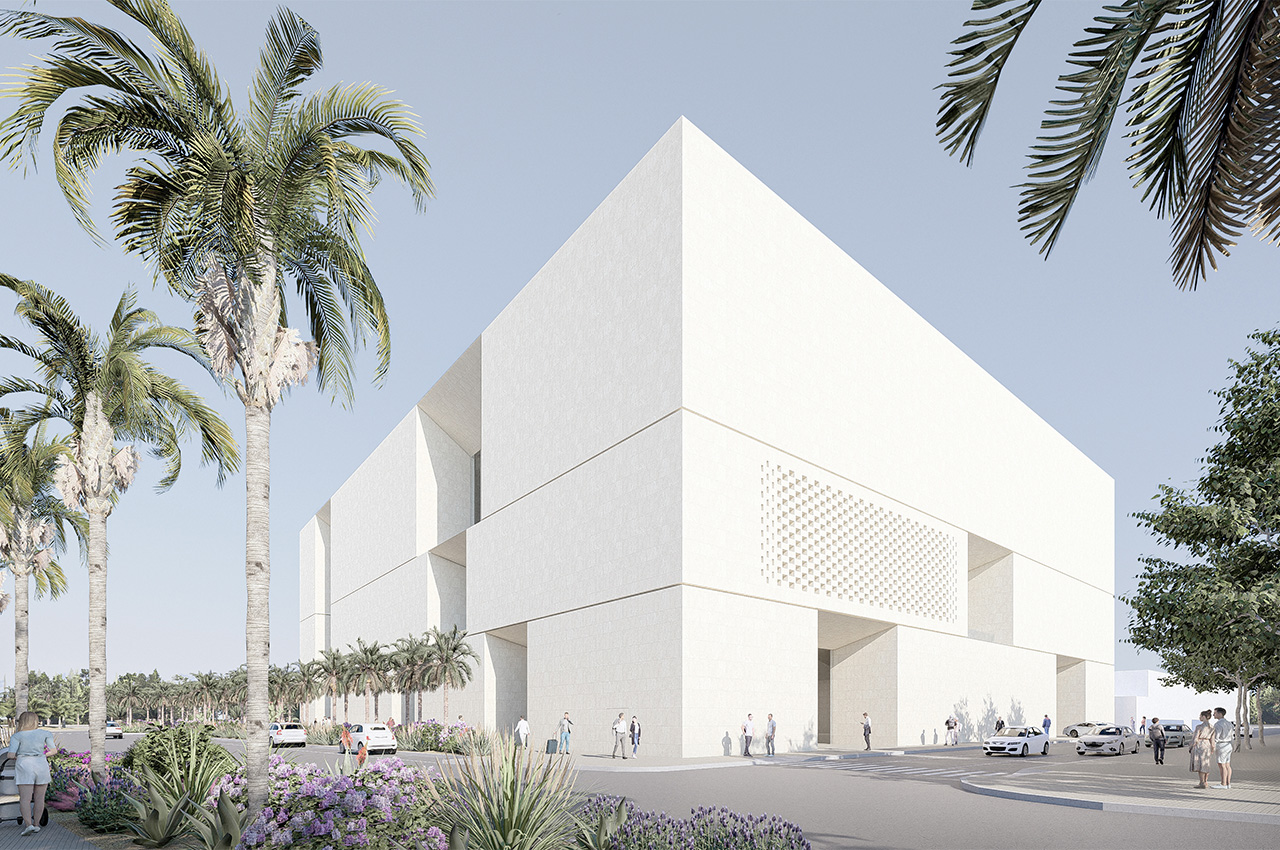
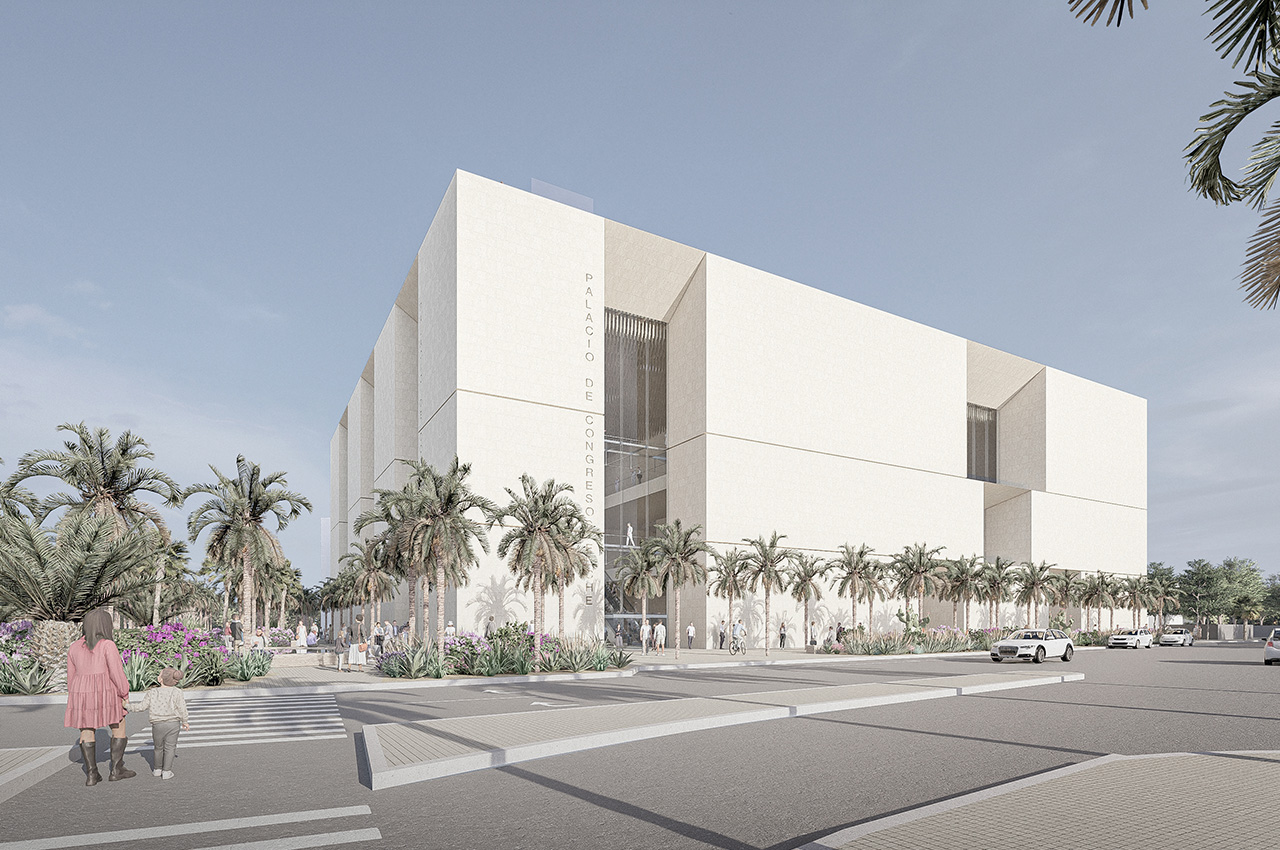
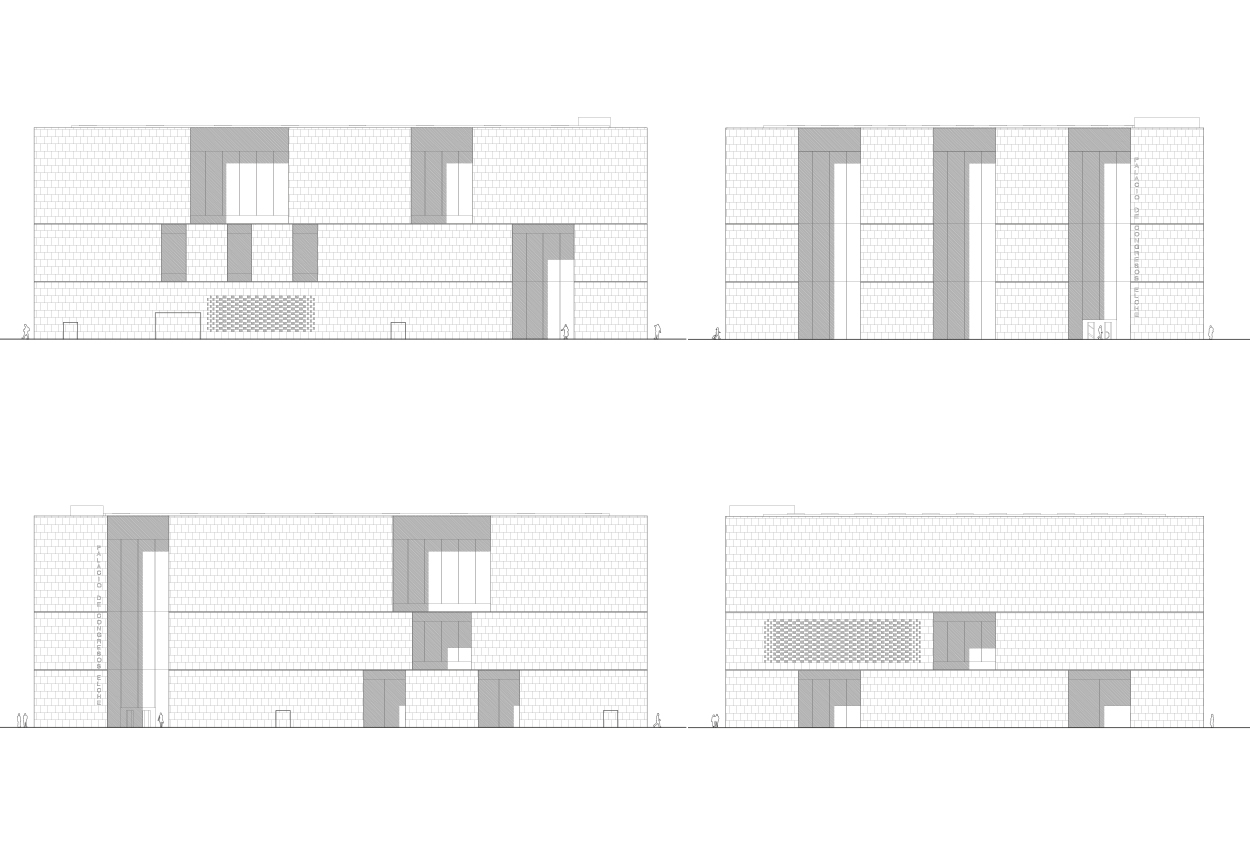
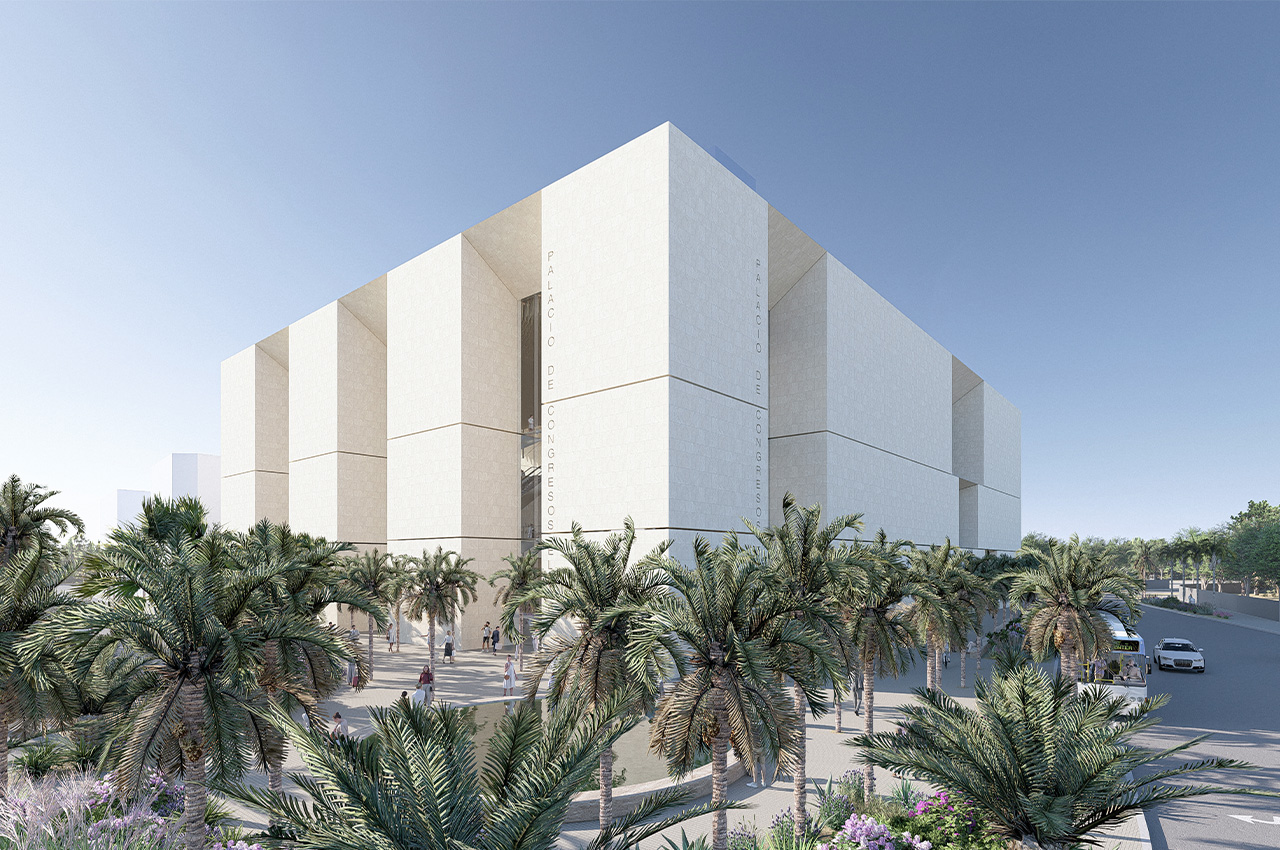
The building is thus configured as a large block of local limestone, figuratively constructed as a stack of cyclopean quarry blocks, in which the openings are configured as deep loopholes, with the enclosures set back deeply to protect the interior from the intense sunlight of the local climate. The monolithic quality of the design attempts to produce a representative monumentality for this new local institution. The stacking of ashlars is progressively arranged toward the most public side of the building, facing University Avenue, producing four pylons that form a tetrastyle portico that harks back to the Greek and Phoenician influences that shaped the culture of the indigenous populations.

The portico opens toward University Avenue and the Palm Grove of Elche. The stony materiality of the limestone façade extends to the flooring, both interior and surrounding, where we propose the use of Crema Marfil marble, which is the metamorphic version of Novelda limestone and has greater abrasion resistance. The Crema Marfil flooring will be continuous between the interior and exterior of the building. Both Novelda limestone and Crema Marfil marble are carbonate rocks, composed primarily of calcite, with the presence of fossils and veins, which are characteristic of the Bajo Segura area and therefore integral to the local landscape.

CONSTRUCTION OF THE ENVELOPE

The building envelope is proposed as a structural and environmental shell composed of a reinforced concrete wall with a structural function, but also an acoustic one, insulating the building from surrounding noise and providing thermal inertia to the building’s structure. This shell will be covered externally with a layer of thermal insulation and an exterior waterproofing membrane. The waterproofing membrane is protected with Novelda limestone cladding, secured with a system of profiles, clips, and spacers that create a ventilated façade. The large glass openings of the atrium will be made with large-format double-glazed panels, hung from the lintels and supported by tempered glass uprights. This envelope system and the low proportion of openings in the façade ensure a transmittance below 0.6 W/m²K, exceeding the requirements of regulations.

FLEXIBLE SPATIAL ORGANIZATION

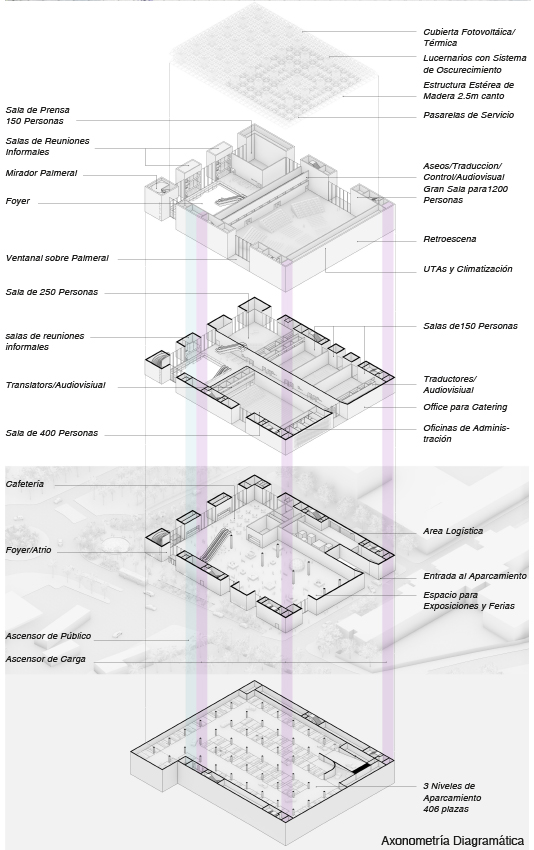
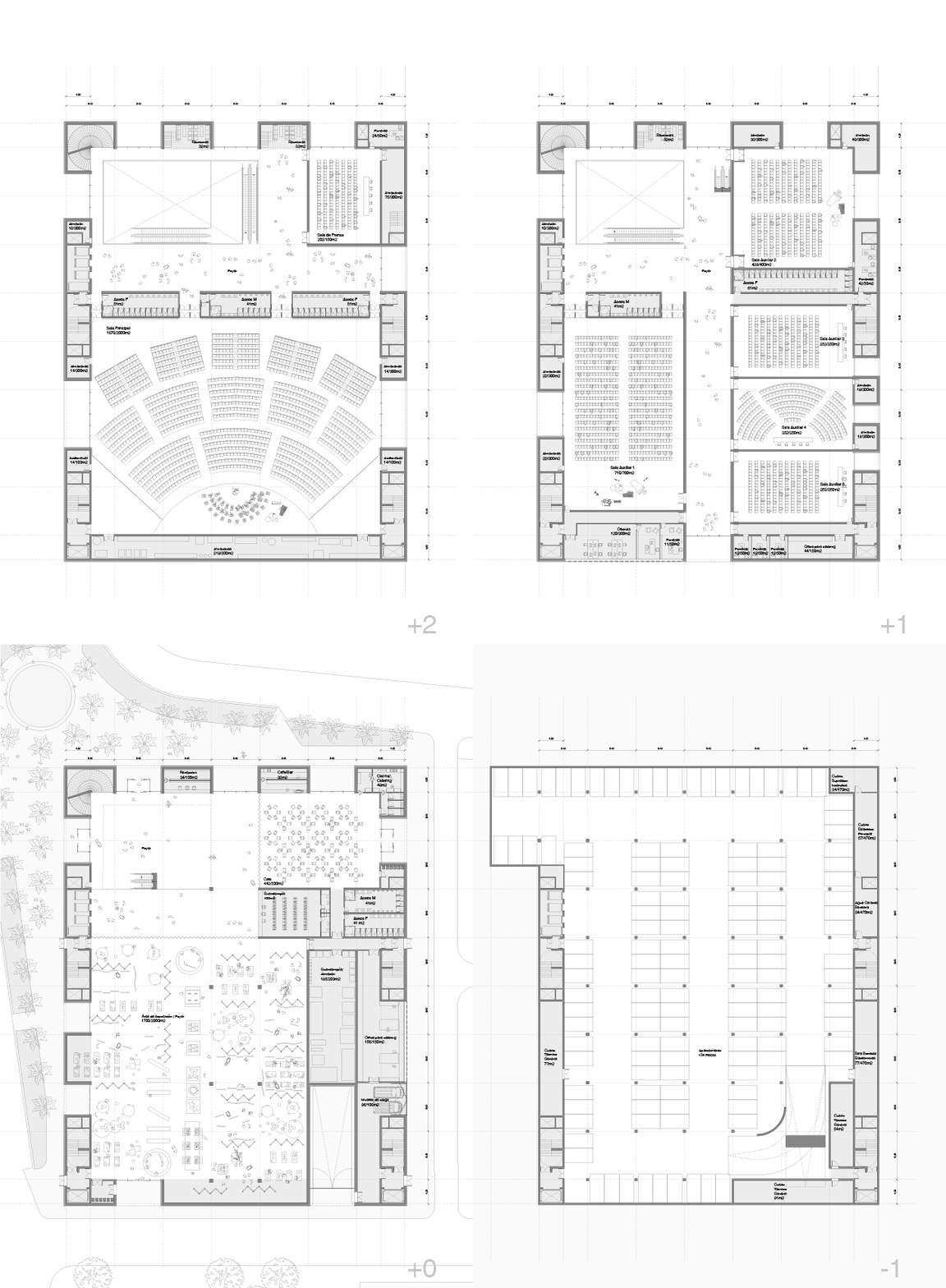
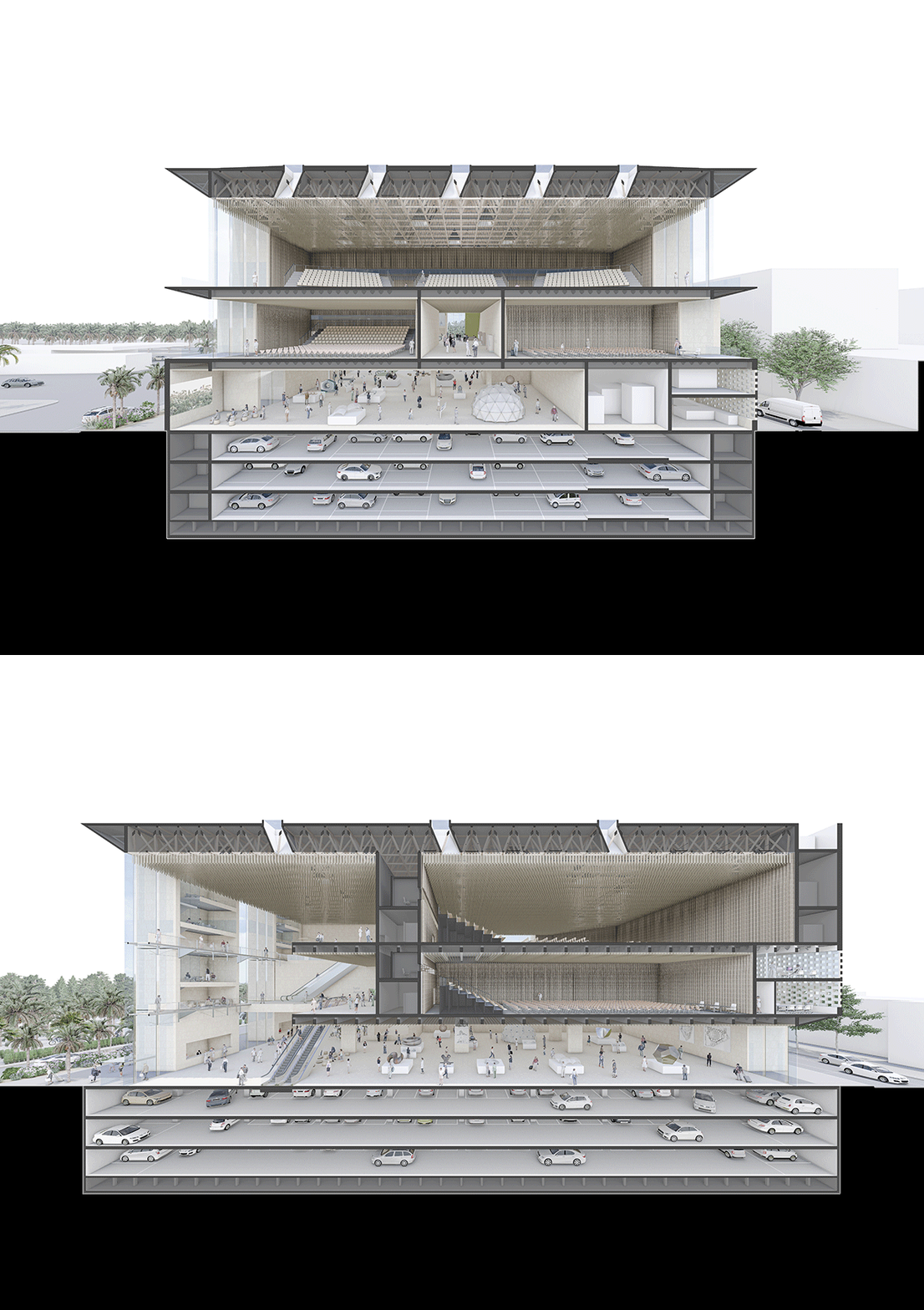
We have tried to provide the project with maximum flexibility in terms of program, and therefore have avoided sloping floors, so that all spaces in the building can be used as multifunctional spaces, including the exhibition and trade fair space that serves as the building’s entrance foyer. Visibility and acoustics will be guaranteed because the maximum depth of the halls does not exceed 35 m, so they can be used practically without acoustic amplification. In the two largest halls, we have maintained the horizontal floor but have allowed for the use of retractable seating when necessary to elevate the spectators’ vantage point. The retractable seating can be stored in the spaces adjacent to the halls when the halls are used for events that require a flat floor.

CIRCULATION

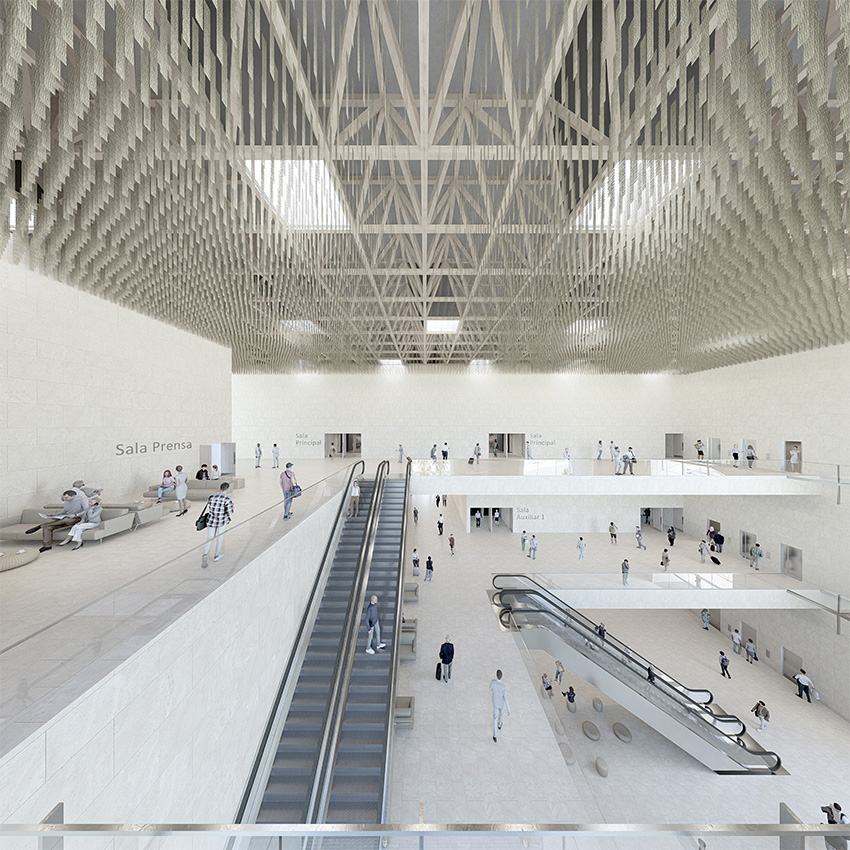
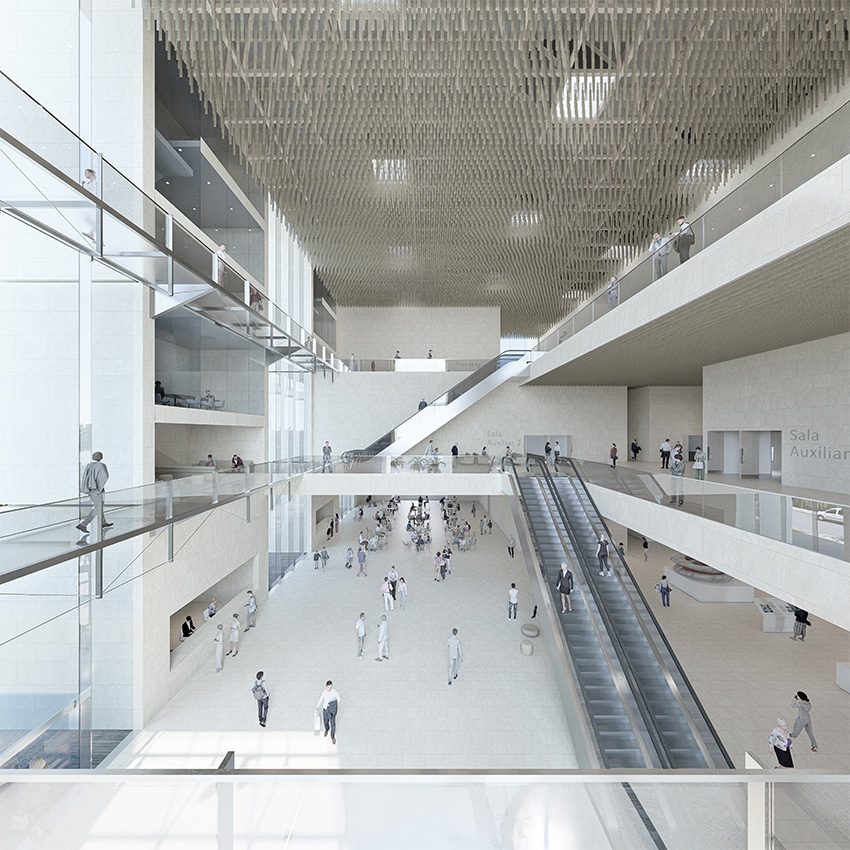
A public access atrium located in the northwest corner runs through the three levels, creating spatial continuity between them and containing all vertical communication elements: a series of escalators and four 13-seat elevators comprise the high-capacity vertical circulation system providing access to audiences. A monumental spiral staircase is located in the northwest corner, providing access to a public viewing platform from which the Palmeral can be viewed. Four fire escape stairs, two at the corners of the south face and two between the east and west faces, will allow rapid evacuation of the complex in the event of an emergency and will serve as service hubs, along with two 3,000-5,000-kilo freight elevators at the two corners of the south face, and a third adjacent to the public elevator hub.

ROOM FEATURES

We have ensured that the rooms offer optimal visual and acoustic qualities and maximum flexibility. All rooms have natural lighting with the option of dimming and a flat floor, allowing them to be used for conferences, music, or banquets. All rooms except the two largest have a depth of 20.7 m and can therefore be used without amplification, with direct sound, with reverberation times (T30) suitable for any use, and a reversible panel system that adds reflectance to the ceilings and walls of the rooms. The Main Hall and the Secondary Hall have a depth of 35 m, ensuring excellent visual and acoustic conditions. These halls are equipped with retractable seating, which can be deployed for staged events (spoken or musical). The Secondary Hall and the three 150-seat halls have a 1:1.6 ratio, ideal for the hall’s acoustics. The Main Hall and the Press Room have a 1:1.35 ratio, which can be adjusted using reflective panels. The 250-seat hall is square, 1:1, and therefore requires acoustic correction by introducing reflections on the surfaces.

STRUCTURE

The project’s structure is proposed in reinforced concrete with low-impact specifications. The structure is concentrated along the exterior wall, which will be built with 300 mm thick walls. Two rows of reinforced concrete pillars, located 20 m from the façade, support the floors of both levels. These pillars are made of lightweight, in-situ reinforced concrete, Holedeck type or similar. The structure of the main hall, with a span of 50.4 m, is proposed as a stereoscopic structure made of (very lightweight) wood and steel nodes, with a 2.1 m x 2.1 m mesh supported by a lightweight cross-laminated timber (CLT) roof and a 150 mm layer of waterproofing insulation, over which a visitable photovoltaic-thermal roof is placed. The lightness/lightness ratio of these systems is the most competitive on the market, and therefore, they are also competitive considering the impact of the materials.

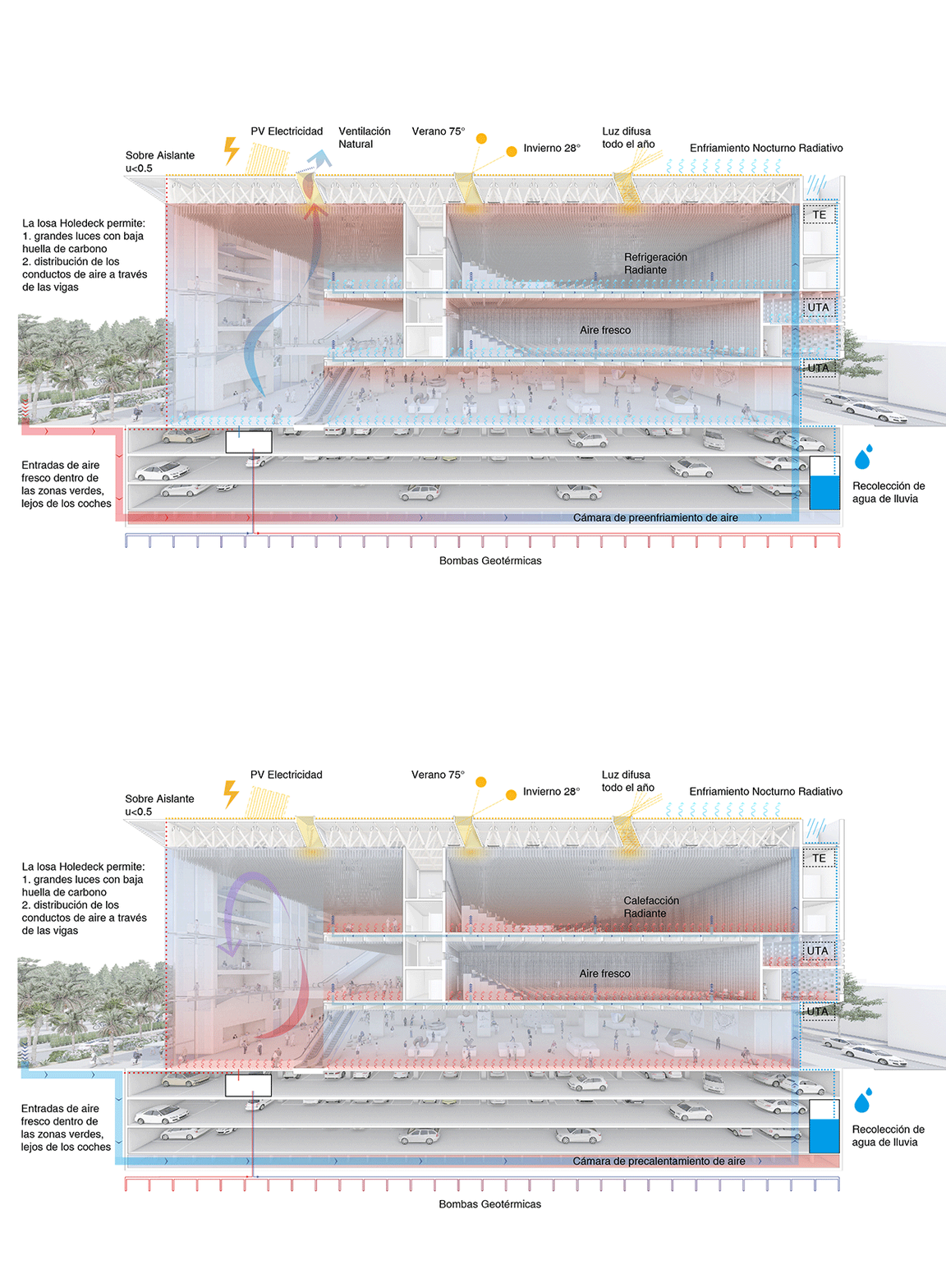
PASSIVE ENVIRONMENTAL STRATEGIES: COMPACTNESS, INSULATION, THERMAL MASS, RAINWATER HARVESTING

Our proposal is designed to optimize the building’s environmental performance, including energy consumption, carbon emissions, and embodied energy. We used seven environmental efficiency strategies:

1. Compactness and thermal mass

2. Small form factor

3. Low void percentage

4. Natural lighting

5. Natural ventilation

6. Rainwater harvesting

7. Air preheating/precooling chamber

AZPML
LEGAL COPYRIGHT@ AZPML. all copy rights reserved