AZPML
  • Projects
    • Use
      • Civic
      • Culture
      • Education
      • Exhibition
      • Infrastructure
      • Landscape
      • Leisure
      • Masterplanning
      • Mixed Use
      • Office
      • Research
      • Residential
      • Retail
      • Sport
      • Transport
    • Size
      • <1.000m2
      • 1.000 – 5.000m2
      • 5.000 – 10.000m2
      • 10.000 – 50.000m2
      • >50.000m2
    • Location
      • Africa
      • Asia
      • Australia
      • Europe
      • North America
      • South America
  • About
    • Profile
    • Principals
    • Awards
    • Publications
  • Contacts

Client: City of Tallinn

Location: Tallinn, Estonia

Date: 2025

Type: Culture

Area: 15319m2

Budget: Undisclosed


AZPML

Alejandro Zaera-Polo, Maider Llaguno-Munitxa, Ivaylo Nachev

General Aims

The primary ambitions of our project are:

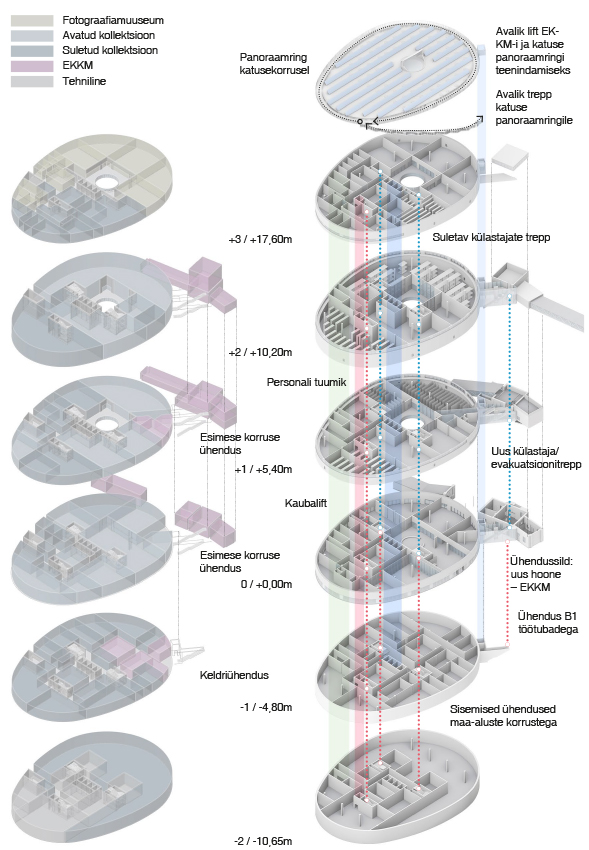
1.To provide connectivity across the three institutions housed in the new building, enhancing synergy between them and with the public.

2.To create a structure with the maximum flexibility so that the building can accommodate programmatic changes in the future.

3.To achieve maximum sustainability through the compactness of the building mass and the adoption of innovative technologies.

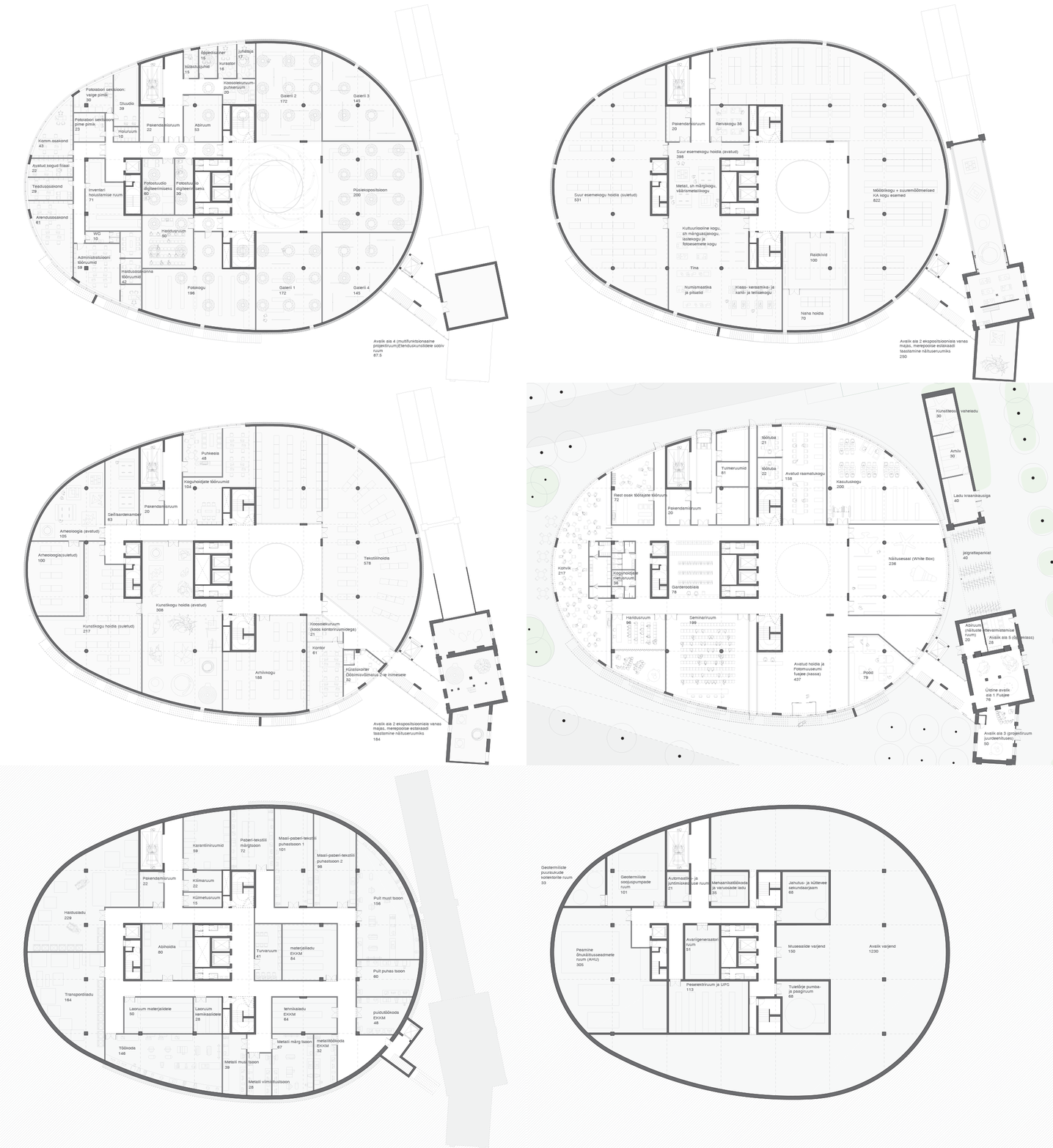
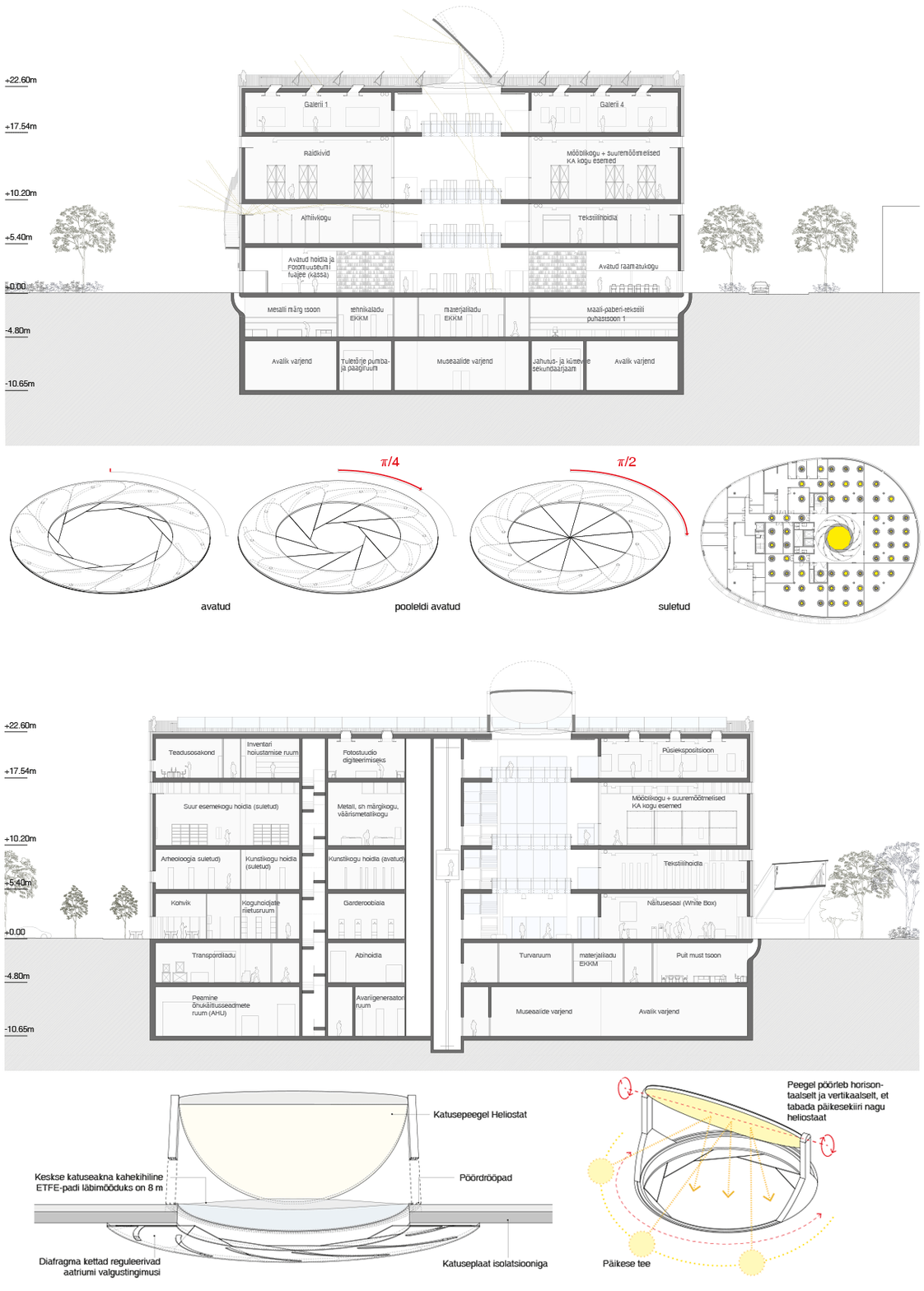
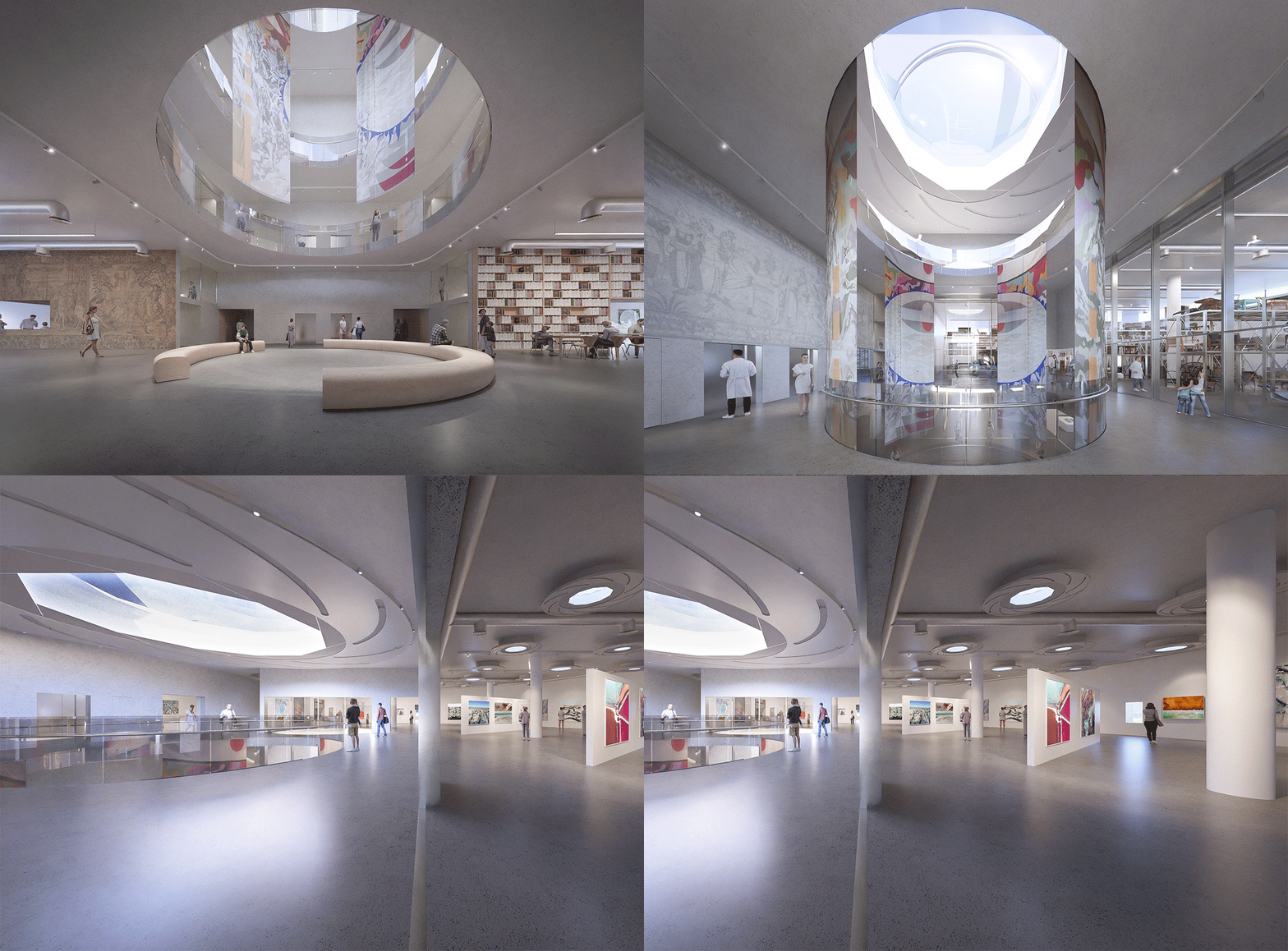
Our proposal for the future Tallinn City Open Collections Building is aimed to provide a landmark building which will engage with Tallins’s industrial waterfront redevelopment, while providing an open infrastructure open and capable to engage the public. The building has been designed as a very compact, single mass, organized around a central atrium which will provide visual and physical connectivity between the different departments, while acting as a thermal regulator and air-circulation inducer. In the summer, the atrium will act as a natural ventilation engine, making the air move upwards through buoyancy while extracting the air from the rooms naturally. In the winter it will act as a thermal buffer where the air will be naturally heated by the greenhouse effect.

The atrium will be crowned with a Tallinn-specific artifact that we have designed to provide daylight to the atrium space, which will become the centre of the public access into the collections: A heliostatic mirror. A mechanized 8,40 m-wide robotic mirror will provide optimal daylight to the atrium throughout the year, no matter how low is the sun. As long as the sun is above the horizon, the heliostatic mirror will bring the sunlight into the atrium, while providing an attraction for the public accessing the roof’s viewing platform.

Urban Performance

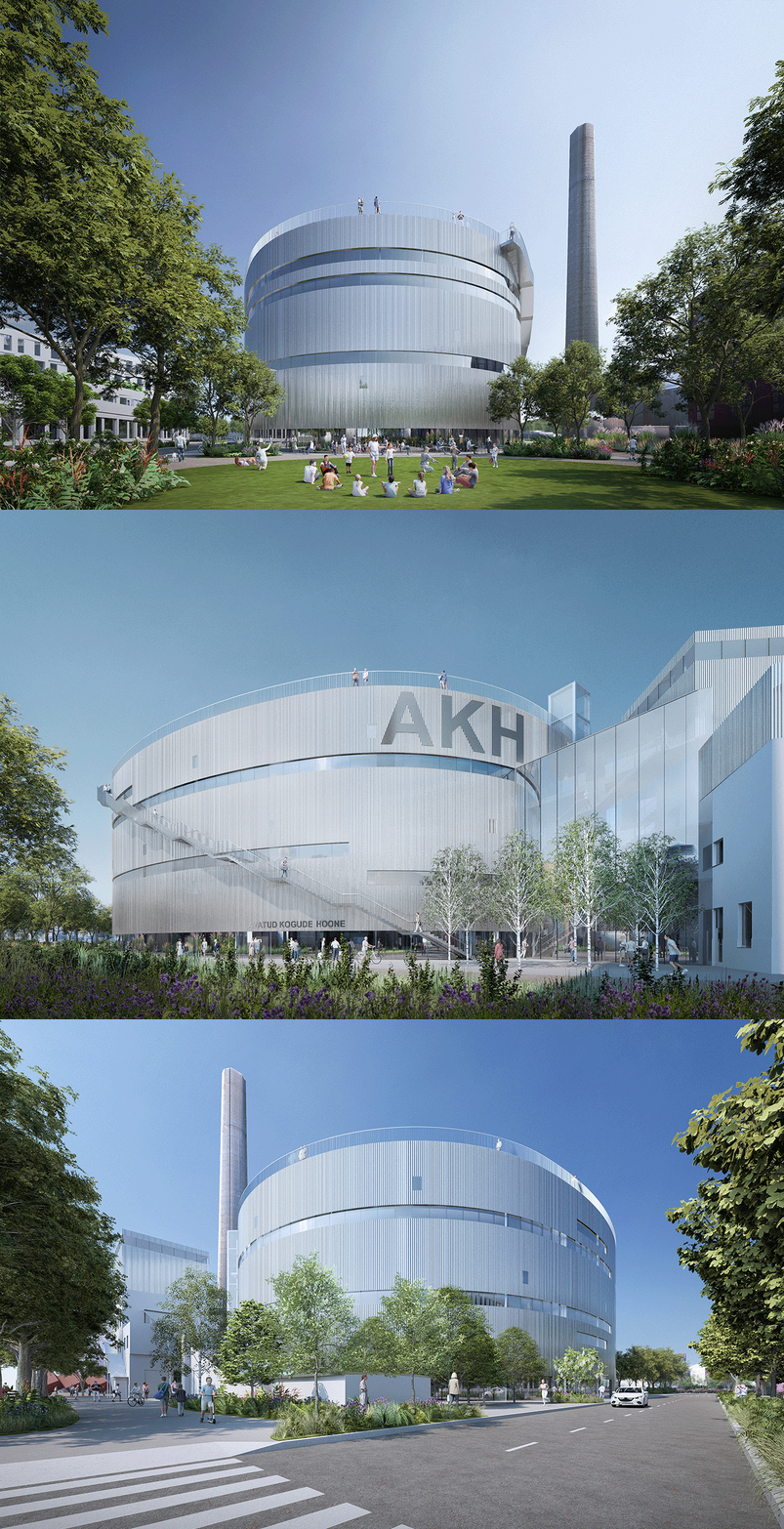
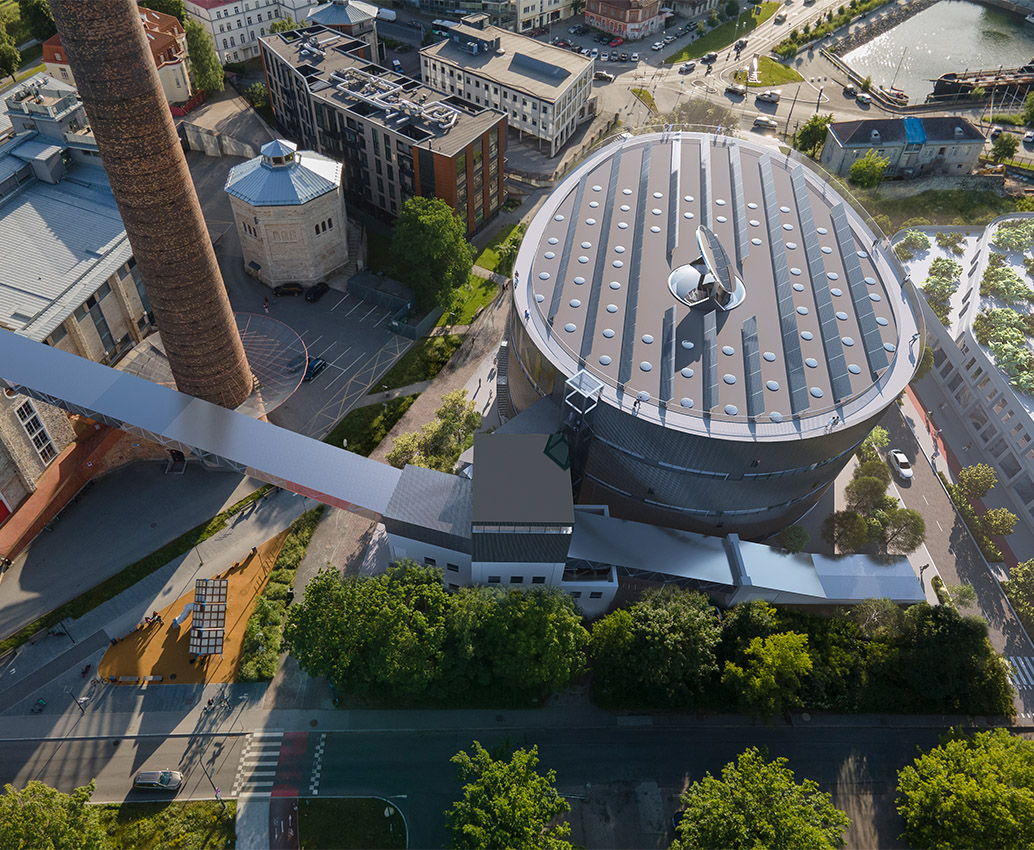
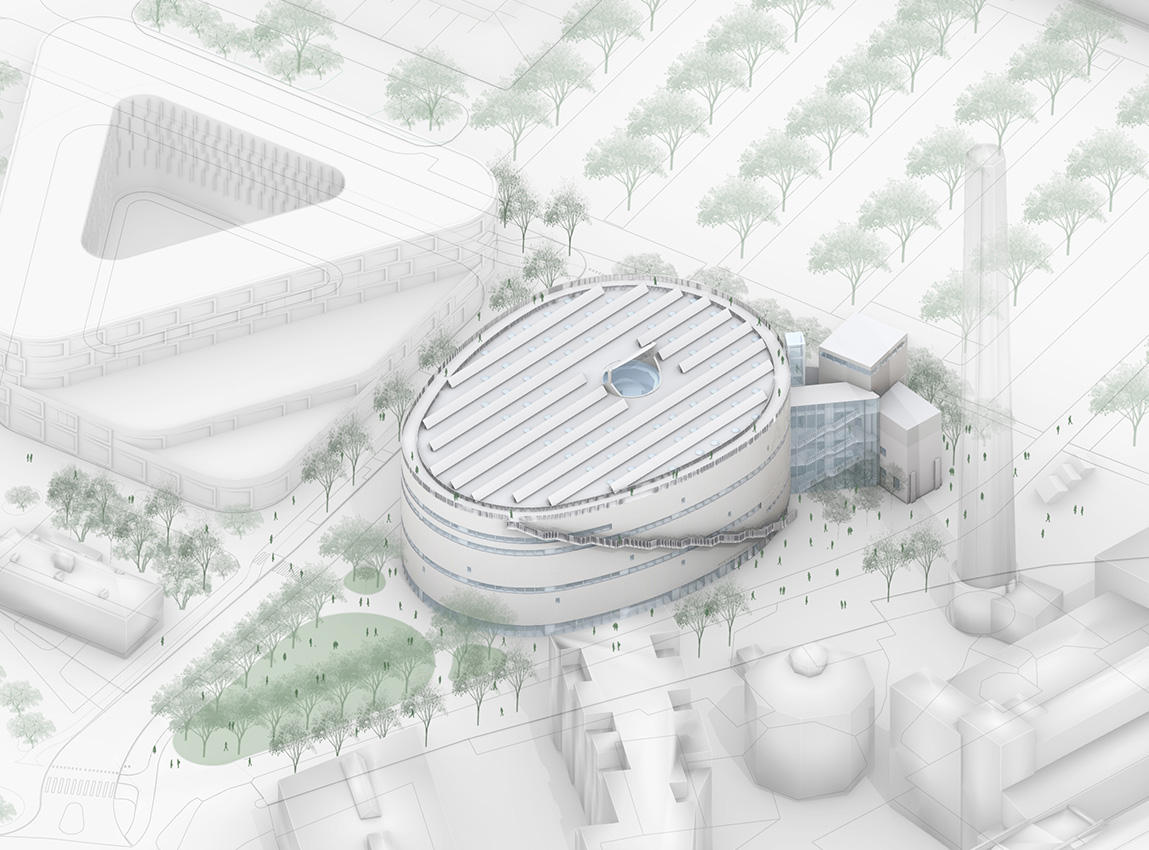
Much like the industrial silos in the former harbour, our building uses a form that maximizes compactness, which will help to preserve the strict climatic conditions in the building at the minimum cost: the mass of the building is an extruded oval which fits the necessary program in the available space freeing the land on the western side of the site for an open public space where events may take place. The oval plan will create a proximity to the former auxiliary building of the Tallinn Thermal Power Plant, but will keep a distance with it allowing its perception as a three-dimensional object. It will also create a series of interstitial spaces between both, which will act as an entrance courtyard.


The oblong shape of the plan will keep the building mass as a free-standing volume, much like the gas silos and tanks that exist in the Tallinn Thermal Power Plant, retaining the free-flowing quality of this industrial/maritime space of the Tallinn’s Waterfront. Rather that building an urban street alignment. The massing of the project will automatically give the building a certain autonomy and monumentality reminiscent of Tallin’s defensive towers, such as the Fat Margaret Tower in Tallin’s Castle.

The top level of the building will not have perimetral clerestories but skylights that could be mechanically dimmed up to a complete blackout, so that exhibits can have total daylight control. Their design is based on photographic shutters, so that the use as a Museum of Photography is patent in the design of the space. One of the shutters devices will be located above the oculus above the atrium to regulate the daylight intake and close the building securely.

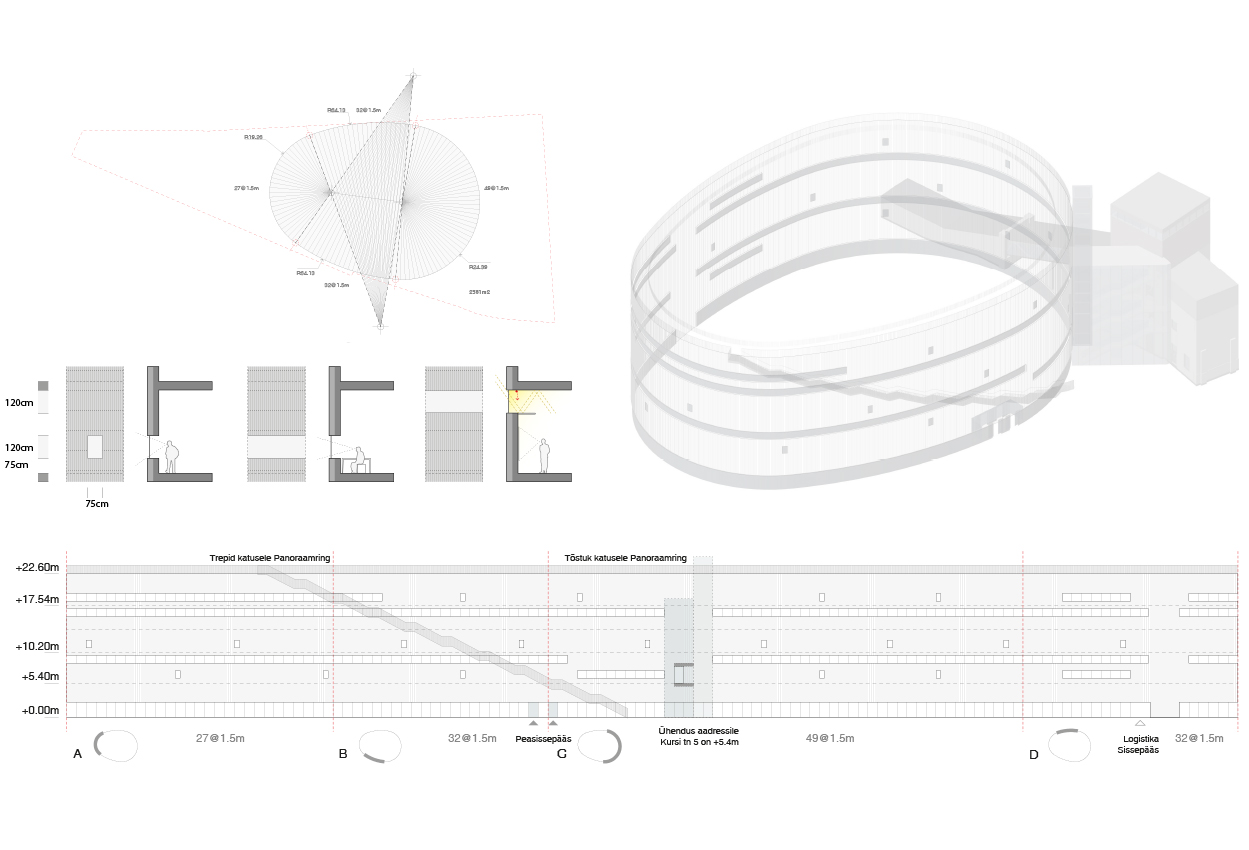
Sprinkled through the external wall we have also located some arrow slits to allow visitors to peak outside while visiting the collections, therefore retaining a visual relationship between the galleries and the urban surroundings when desired.

A third fenestration system will be provided in the administrative offices as a triple-glazed horizontal window with natural ventilation possibility.
AZPML
LEGAL COPYRIGHT@ AZPML. all copy rights reserved